

Welcome to The Weekly Archive, a short trip through psychedelic history.
For every legend like Aldous Huxley or Timothy Leary, there are countless forgotten pioneers who helped shape the modern psychedelic movement.
This week, we’re exploring three unsung heroes of psychedelics.
Here are 3 artifacts, 2 quotes, and 1 trip thought for the journey.
Artifacts:
1. Susi Ramstein: The First Woman to Take LSD
The most famous bicycle ride in psychedelic history had two riders. Yet only one became a legend.
On April 19, 1943, Swiss chemist Albert Hofmann swallowed 250 micrograms of LSD at Sandoz Laboratories, embarking on the world’s first intentional LSD trip.
As reality dissolved into a destabilizing kaleidoscope, Hofmann asked his 21-year-old lab assistant, Susi Ramstein, to escort him home.
With wartime restrictions limiting automobile travel, the two climbed onto their bicycles and pedaled through the streets of Basel.
Hofmann later recalled feeling almost stationary, although Ramstein assured him they had been cycling at a normal pace.1
When they finally reached his home, Hofmann feared he was dying. Ramstein called a doctor, contacted his wife, and helped care for him until the crisis passed.2
In doing so, she earned the distinction of becoming the world’s first LSD trip sitter, long before the role had a name.
The journey became immortalized as Bicycle Day, a founding myth of modern psychedelic culture.
Ramstein’s role was largely forgotten. But her contribution to psychedelic history was only beginning.
Born in Basel in 1922, Ramstein entered Sandoz as its only female chemistry apprentice at a time when women rarely pursued scientific careers.
Everybody on Hofmann’s team tried LSD at least once, and Susi tried it a total of three times.
On June 12, 1943, she earned another distinction: the first woman to take LSD. At just 21, she also became its youngest known participant, taking 100 micrograms in the lab.
Her experience was remarkably different from Hofmann’s.
Rather than fearing for her life, Ramstein described the effects as “mild and pleasant.” She encountered a luminous world filled with beautiful imagery, later remembering it simply as “a good experience.”3
And when it came time to go home, she made a more sensible transportation decision.
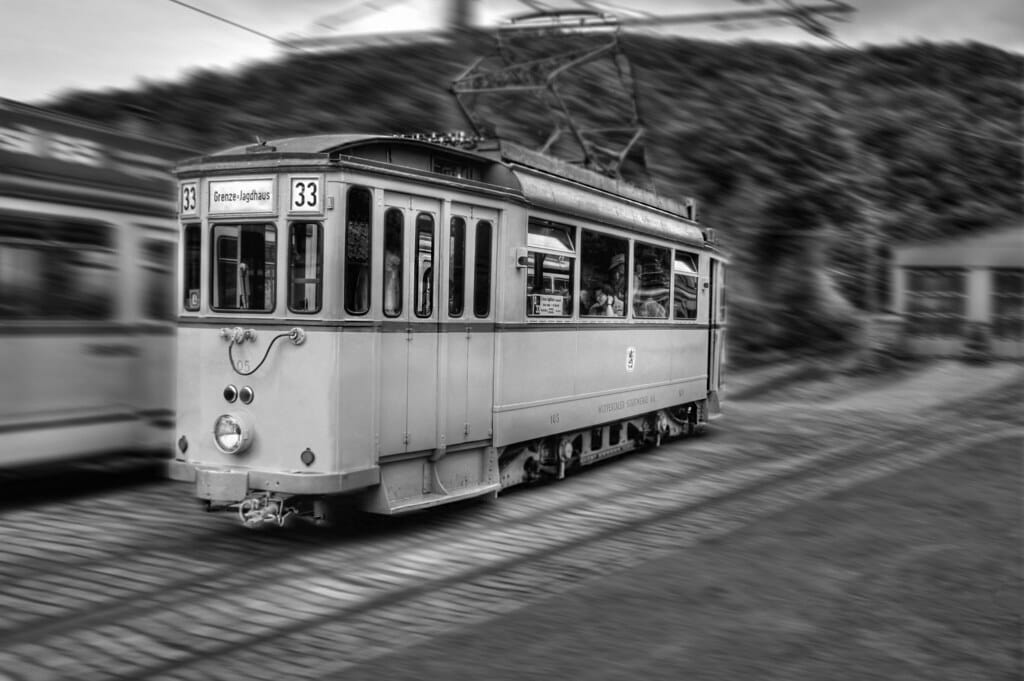
She took the tram.
As she rode through Basel, the conductor’s nose appeared comically enormous, while fellow passengers seemed delightfully strange.3
Despite these distortions, she remained composed and arrived home safely.
Ramstein would repeat the experiment twice more to help establish safe dosage parameters for the medical use of LSD. At that time, the idea that acid would hit the streets and “go mainstream” wasn’t even remotely considered.
Today, Bicycle Day is celebrated around the world. Ramstein’s own journey has inspired a lesser-known celebration called Tram Day on June 12.4
Her story reminds us that scientific revolutions rarely belong to a single visionary. Behind the celebrated discoveries are often overlooked people whose courage helped make them possible.
2. Al Hubbard: The Johnny Appleseed of LSD
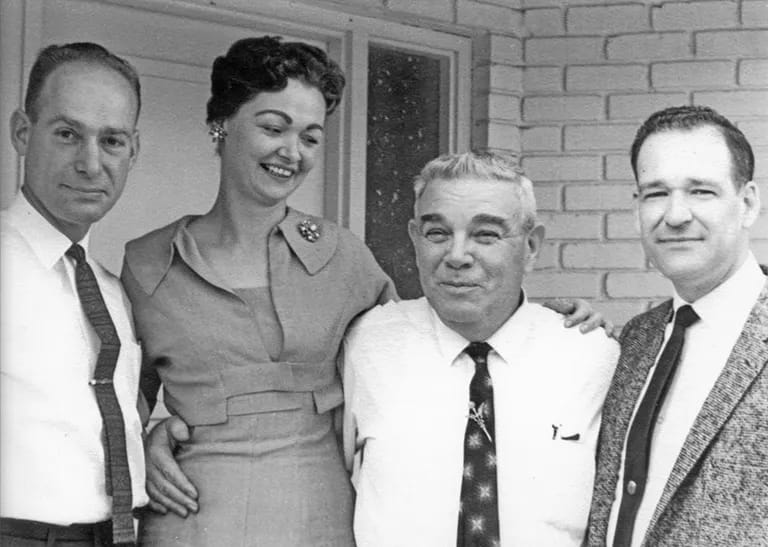
Before Timothy Leary told America to “turn on, tune in, drop out,” a mysterious millionaire was traveling the world with a leather satchel full of LSD, quietly planting the seeds of a psychedelic revolution.
His name was Alfred M. Hubbard, better known as “Captain Trips” or the “Johnny Appleseed of LSD.”
Hubbard was one of the strangest characters in psychedelic history. A former bootlegger, inventor, government informant, and uranium entrepreneur, he had allegedly amassed a fortune and purchased his own private island off the coast of Canada.5
Then, according to his account, an angel appeared to him.6
During a walk in the woods, Hubbard claimed to have received a vision that he would soon discover something capable of changing humanity’s future.
In 1950, he stumbled across a scientific article describing a little-known chemical called LSD. Convinced this was his calling, he obtained some and tried it himself.
The experience was so profound that Hubbard abandoned his uranium business and dedicated the rest of his life to spreading the gospel of LSD.
He traveled to Switzerland, secured a large supply from Sandoz Laboratories, and embarked on an extraordinary mission: introducing influential people to the transformative potential of psychedelics.
According to Dr. Abram Hoffer,
“Al had a grandiose idea that if he could give the psychedelic experience to the major executives of the Fortune 500 companies, he would change the whole of society.”6
Over the next two decades, Hubbard reportedly introduced more than 6,000 people to LSD, including scientists, artists, intellectuals, and prominent public figures.
Among them was Aldous Huxley, author of The Doors of Perception, who received his first LSD experience through Hubbard on Christmas Eve, 1955.5
He also introduced LSD to Alcoholics Anonymous co-founder Bill Wilson and supplied Hollywood psychiatrists whose patients included Cary Grant, Jack Nicholson, and Stanley Kubrick.
Yet Hubbard’s greatest contribution may have been his uncanny ability to guide people through psychedelic experiences.
Somehow, this gun-toting millionaire with a shadowy past had become one of the most respected psychedelic guides of his generation.
Myron Stolaroff, a Silicon Valley executive whose life was transformed by a session with Hubbard, later recalled:
“As a therapist, he was one of the best.”6
Long before set and setting became foundational concepts in psychedelic therapy, Hubbard understood how profoundly one’s environment could shape an LSD experience.
He surrounded participants with cozy pillows, classical music, beautiful artwork, and religious imagery, creating an atmosphere that encouraged spiritual revelation.
Long before psychedelics became a mass cultural phenomenon, Al was quietly introducing them to the people who would help shape their future. Like his namesake Johnny Appleseed, Hubbard scattered seeds whose eventual growth he could scarcely have imagined.
And much of today’s psychedelic renaissance is still growing from the soil he helped cultivate.
3. Leo Zeff: The Secret Chief
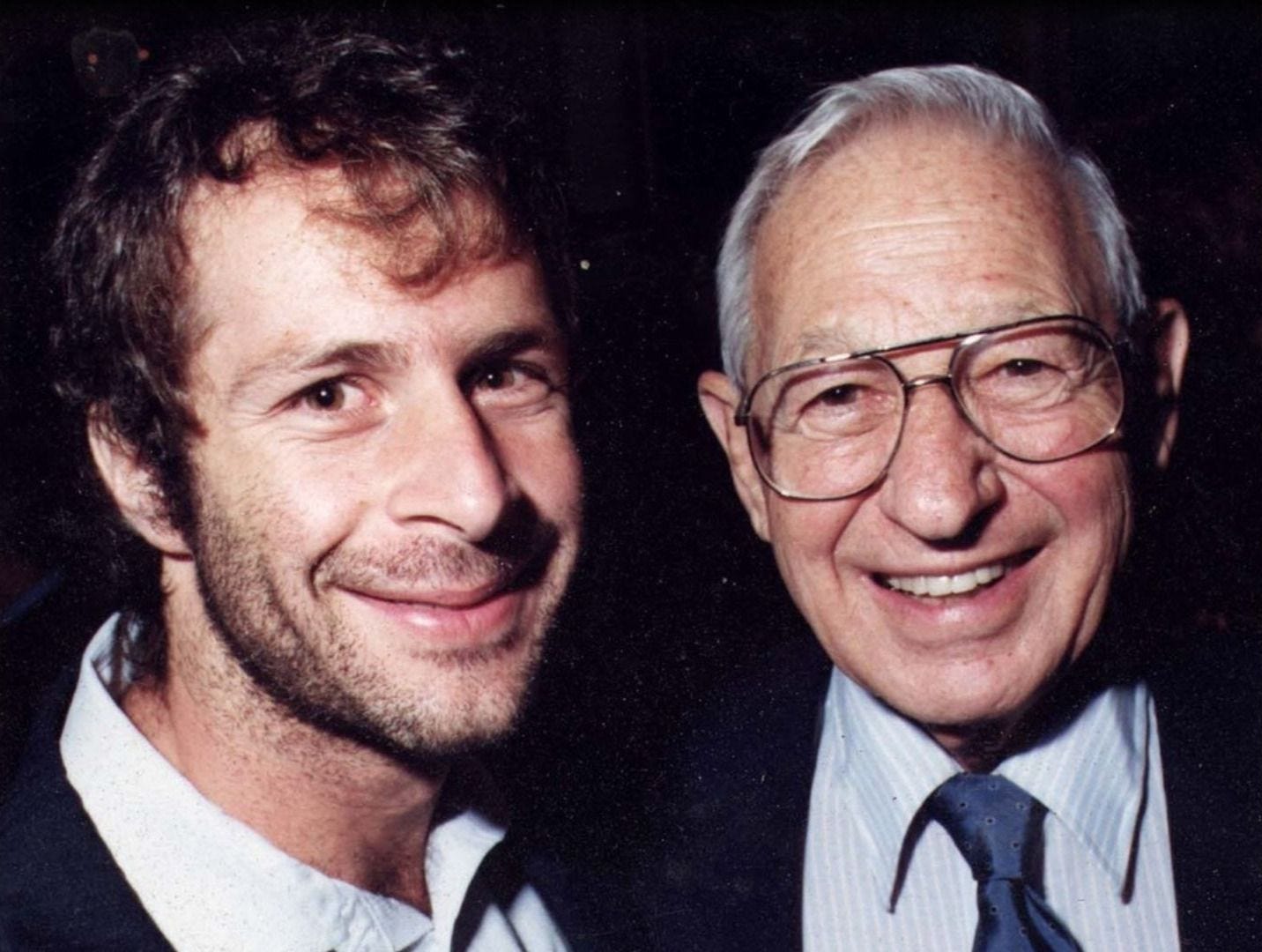
When psychedelic therapy was outlawed, one man quietly kept its flame alive. His name was Leo Zeff, though for decades, most people knew him only as “The Secret Chief.”
Zeff was an Oakland-based psychologist and former U.S. Army officer who discovered LSD’s therapeutic potential in the early 1960s. He became convinced that psychedelics could help people confront buried emotions, heal psychological wounds, and experience profound spiritual breakthroughs.
But when LSD was outlawed in California in 1966, the emerging field of psychedelic therapy faced extinction. Research programs shut down, therapists abandoned their work, and decades of promising discoveries threatened to disappear.
Zeff refused to let that happen.
Working discreetly, he continued guiding psychedelic sessions and training other therapists. Through word of mouth, he helped build an underground network that preserved therapeutic knowledge while the War on Drugs gathered momentum.7
Then, in 1977, something extraordinary happened.
Zeff was preparing to retire when his friend Alexander “Sasha” Shulgin, the legendary psychedelic chemist, introduced him to a little-known substance called MDMA.8
Zeff tried it and immediately recognized its therapeutic potential. MDMA seemed to allow people to revisit painful memories while feeling unusually safe and emotionally open.
He was so impressed that he abandoned retirement and devoted himself to spreading the discovery.
Zeff affectionately called the substance “Adam,” believing it could restore the innocence of Adam & Eve in the Garden of Eden before the Fall, freeing people from the shame and psychological defenses accumulated throughout life.9
Over the following years, he traveled widely, introducing MDMA to therapists and teaching his methods. Historical estimates vary, but his influence eventually reached thousands of people.9
His approach emphasized trust, careful preparation, music, and surrender to the experience. Many elements resemble practices found in psychedelic-assisted therapy today.
But unlike many of his contemporaries, Zeff’s contributions had to remain hidden. As his son Henry later explained:
“He had to stay quiet; to be famous in his time was to cease to be able to help.”7
Zeff died in 1988, before the modern psychedelic renaissance began. His extraordinary story remained largely hidden until Myron Stolaroff published The Secret Chief, a collection of interviews documenting his work.
Today, as researchers revisit MDMA and other psychedelics for treating mental health conditions, Zeff’s legacy feels almost prophetic.
The modern psychedelic movement owes much to famous scientists and outspoken advocates. Yet its survival through prohibition also depended on people like Leo Zeff, who were willing to work quietly, without recognition, even when the future seemed hopeless.
Quotes:
“There’s nothing more satisfying than turning somebody on to themselves.”
— Leo Zeff
“For the growing good of the world is partly dependent on unhistoric acts; and that things are not so ill with you and me as they might have been, is half owing to the number who lived faithfully a hidden life, and rest in unvisited tombs.”
— George Eliot
Trip Thought
A shower thought, but for psychedelics.
All the psychedelic breakthroughs today are connected by invisible threads to people who came before us and kept the beat of the drum going. Most of their names we’ll probably never know.
I’m grateful for everyone who believed in the potential of psychedelics enough to make sacrifices, keep the knowledge alive, and pass it on to the next generation. We’re all here because of them.
Community Bulletin
🍄 Microdosing Summit: Our friends at The Microdosing Collective are hosting their inaugural Microdosing Summit on October 21, 2026, in Austin, Texas. Use code ARCHIVES for 10% off.
📚 New Book: In Ordinary Mystics, Matt Zemon bridges the clinical lab and the candlelit ceremony, exploring what happens when ordinary people approach psychedelics as a sacrament and encounter the Sacred directly. Check it out here.
🧘Meditation App: The Way is a guided meditation program led by Zen master Henry Shukman, designed to help build a deeper, more consistent practice. Use this link for 30 days free.
Thanks for reading!
If something resonated with you, or if you have thoughts, questions, or ideas for future editions, I’d love to hear from you.
Just reply to this email. I read every response, and your feedback helps shape where this project goes next.
See you next week!
In psychedelic companionship,
- Kyle Sharp
Sources: