


Welcome to The Weekly Archive, a short trip through psychedelic history.
We know we live on a planet suspended in space, but rarely pause to feel what that means.
This week, we’re exploring how a change in perspective can deepen our sense of belonging in the universe.
Here are 3 artifacts, 2 quotes, and 1 trip thought for the journey.
Artifacts:
1. An Acid-Fueled Vision of Earth
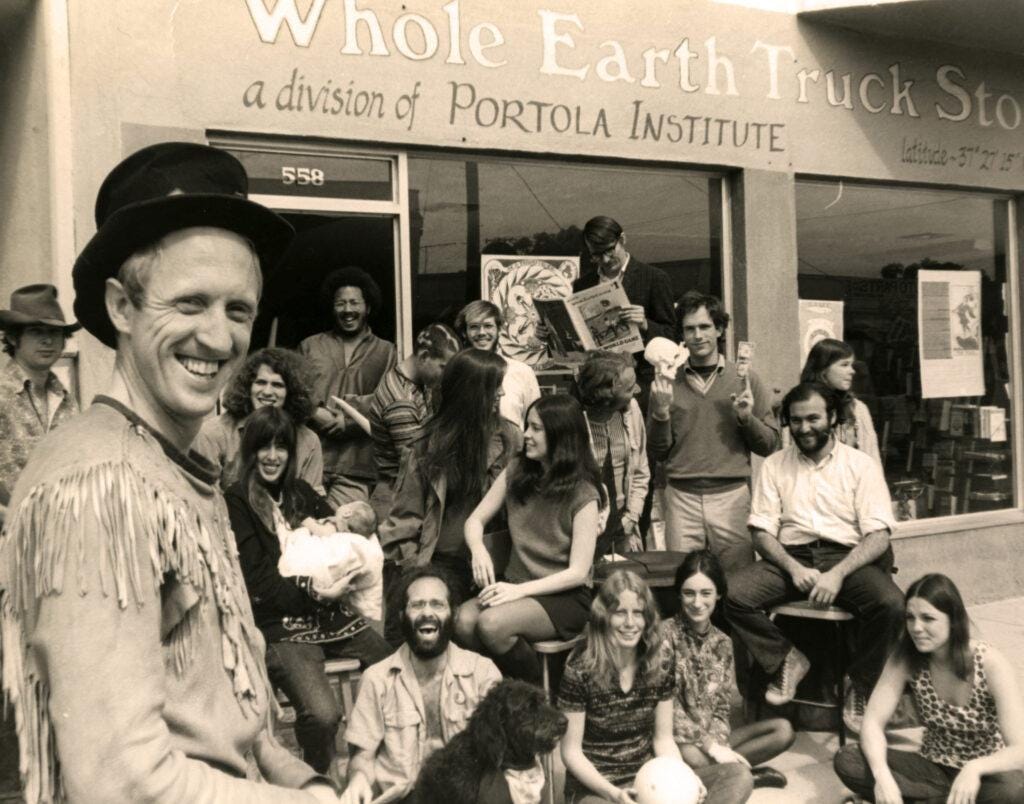
In February 1966, Stewart Brand took LSD on a San Francisco rooftop and had an idea that would help change how humanity saw its home planet.
Brand was 28 years old and an emerging environmentalist deeply immersed in the psychedelic counterculture.
Recalling that fateful afternoon, he wrote:
“In those days, the standard response to boredom and uncertainty was LSD followed by grandiose scheming. So there I sat, wrapped in a blanket in the chill afternoon sun, trembling with cold and inchoate emotion, gazing at the San Francisco Skyline, waiting for my vision.”1
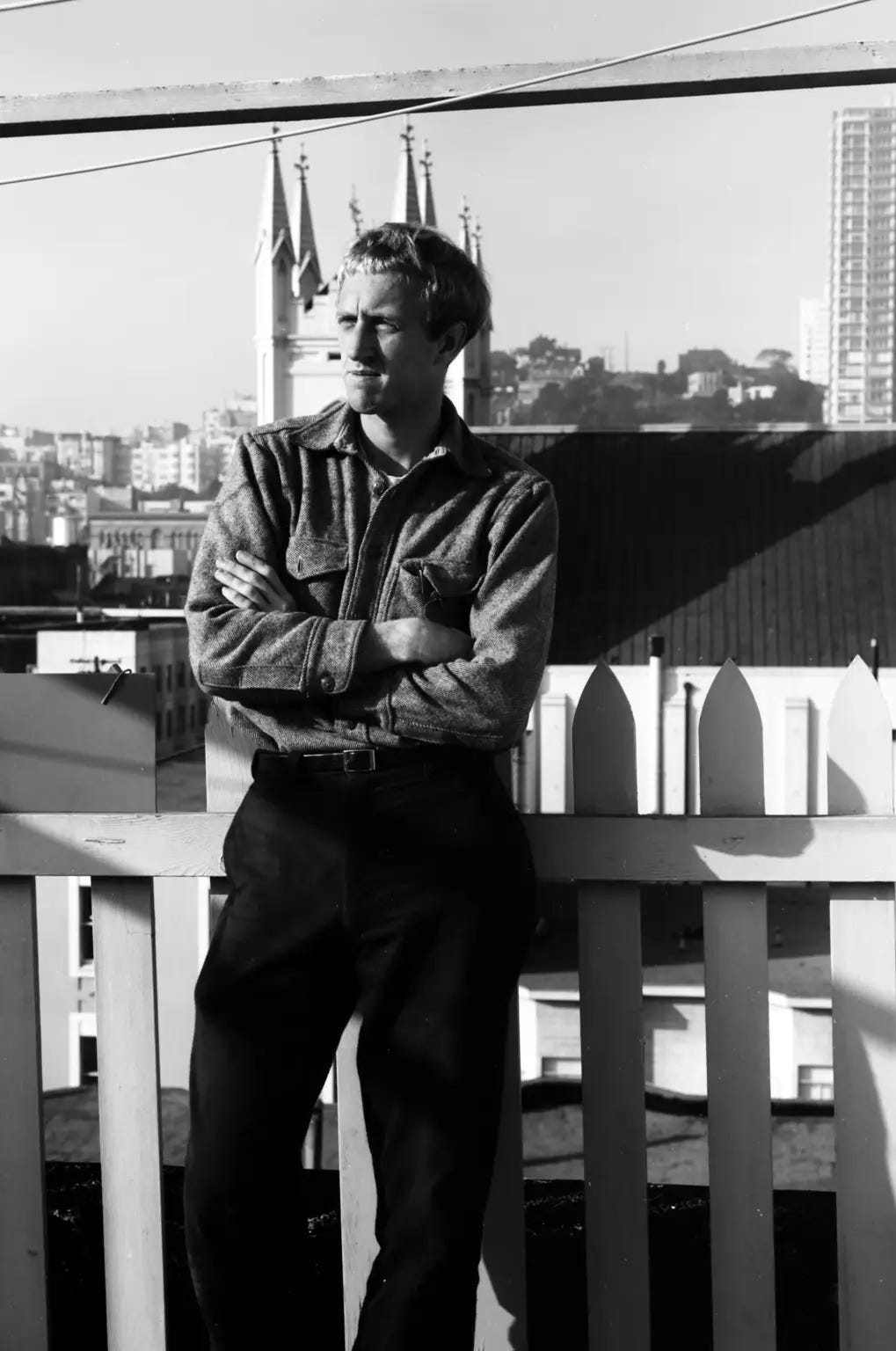
Looking across the rooftops, he began to notice something strange: the curvature of the Earth.
“The buildings were not parallel — because the earth curved under them, and me, and all of us... I remembered that Buckminster Fuller had been harping on this at a recent lecture — that people perceived the earth as flat and infinite, and that that was the root of all their misbehavior.”1
Fuller, an influential philosopher and architect, argued that although we might intellectually understand Earth is finite, we often behave as though it were infinite, treating its resources as limitless and our waste as inconsequential.
For Brand, what had been an abstract idea suddenly became something he could experience.
“Now from my altitude of three stories and one hundred mikes, I could see that it was curved, think it, and finally feel it.”1
Understanding Earth’s limits was one thing. Feeling them was another. How could he help others experience that same shift in perspective?
A photograph might do it. But how could he persuade “NASA or the Russians to finally turn the cameras backwards?”1
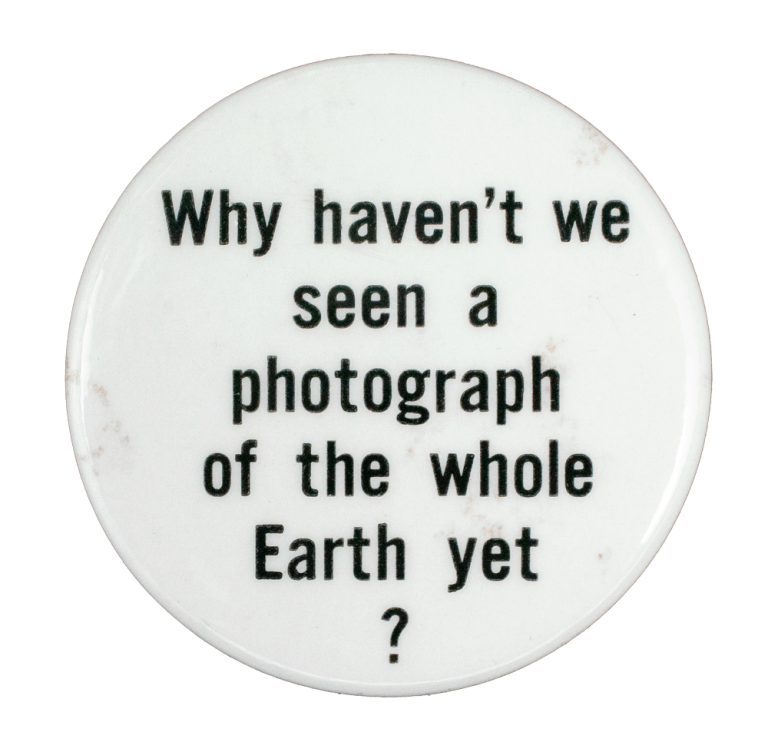
Amid his swirling acid thoughts, an idea took shape: “We could make a button!”
Brand worked through several slogans before arriving at a question:
“Why haven’t we seen a photograph of the whole Earth yet?”
The next day, he ordered buttons and posters, eventually mailing them to NASA officials and members of Congress.
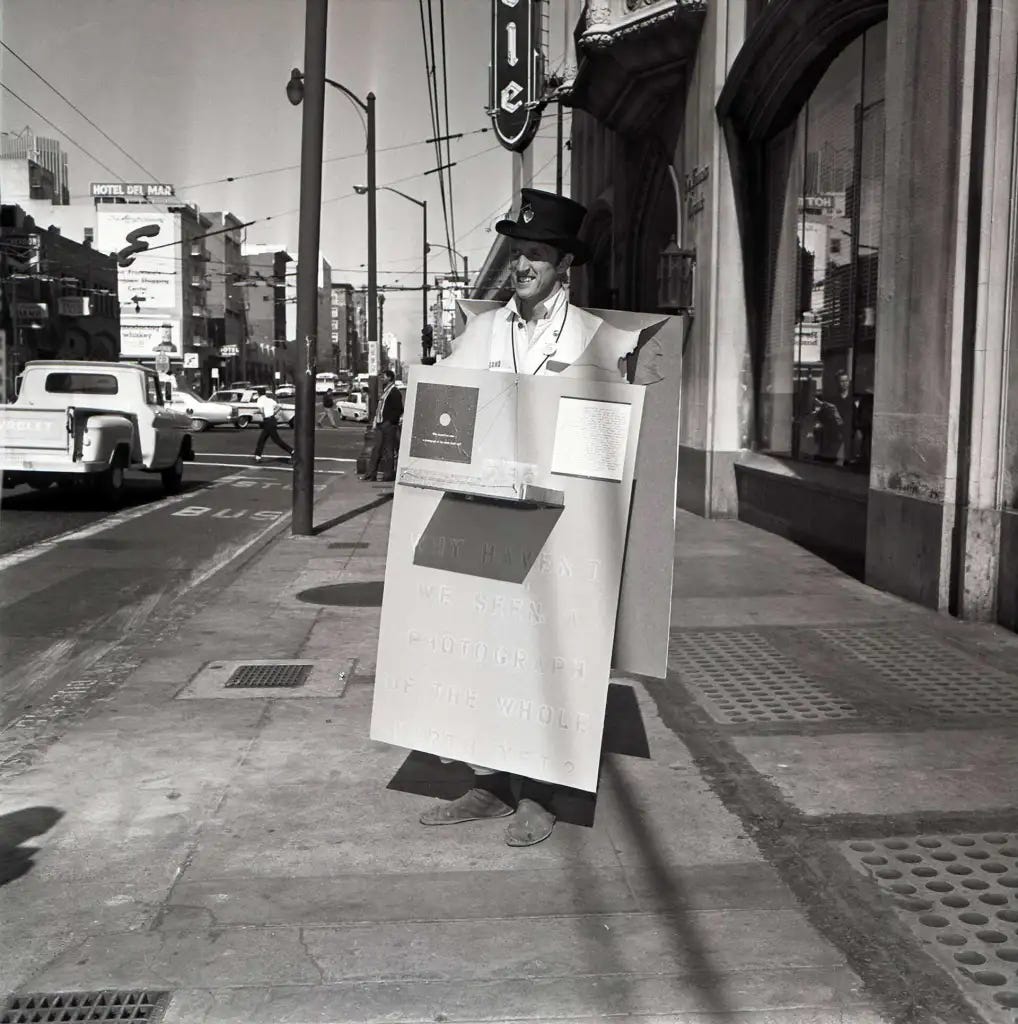
He then showed up at Berkeley wearing a white jumpsuit and costume top hat, selling buttons for 25 cents apiece. When university officials kicked him off campus, the San Francisco Chronicle covered the incident, giving his campaign some unexpected publicity.
The cheeky buttons soon appeared on the lapels of NASA scientists and engineers. Brand’s question had reached the people who could help answer it.2
In 1967, NASA’s ATS-3 satellite captured the first color image of Earth’s full disk. The next year, Brand created the Whole Earth Catalog, a countercultural guidebook for people experimenting with alternative ways of living.
On the cover of its first edition, he placed an image of Earth from space, offering readers a visual reminder of the larger world they shared.
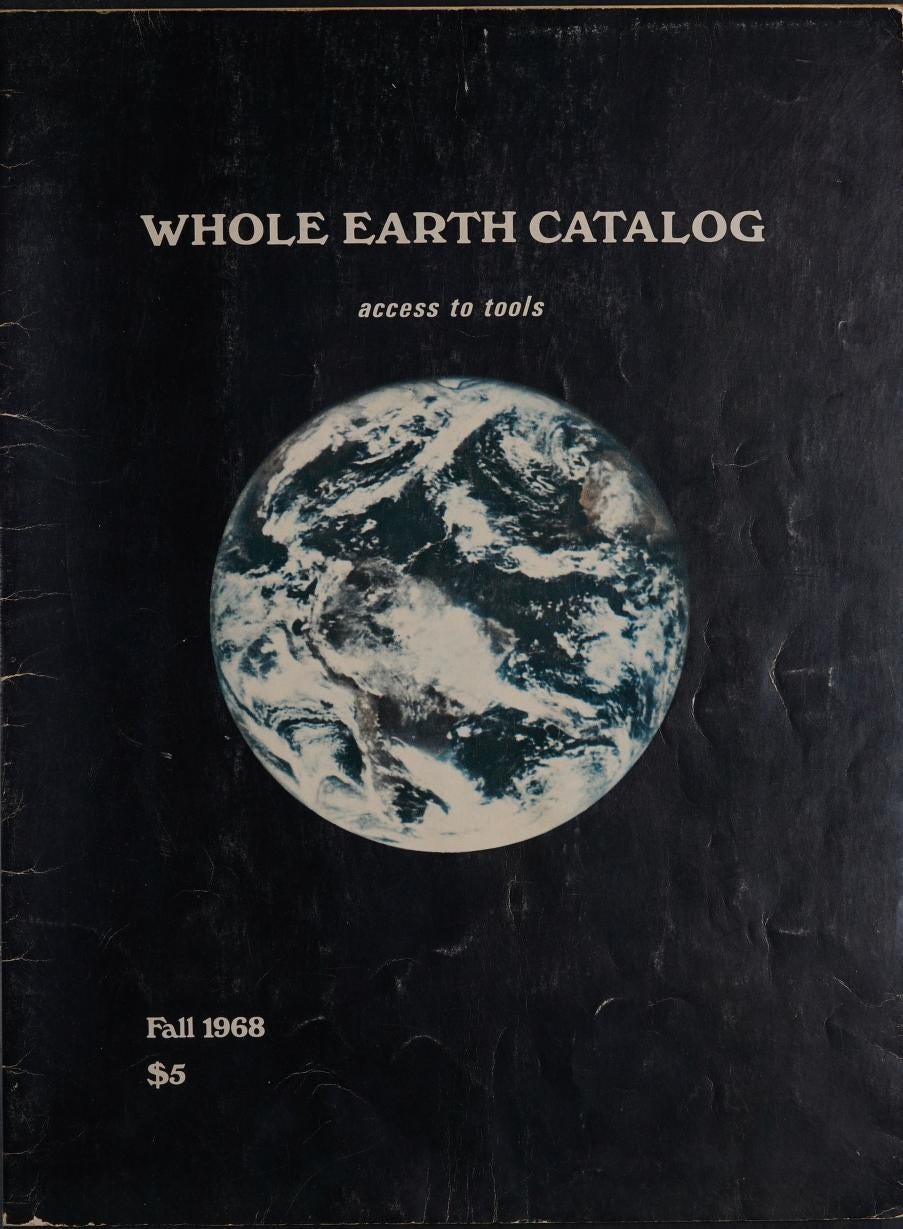
What began as an LSD-fueled realization on a San Francisco rooftop had grown into a campaign to change how humanity saw itself.
Brand’s underlying insight was simple: we already knew we lived on a finite planet. But perhaps seeing it with our own eyes could transform how we felt about it, and how we treated it.
The image of the whole Earth would become an enduring symbol of our shared home. Learning to live as though we truly share it remains unfinished work.
2. Edgar Mitchell’s Cosmic Homecoming
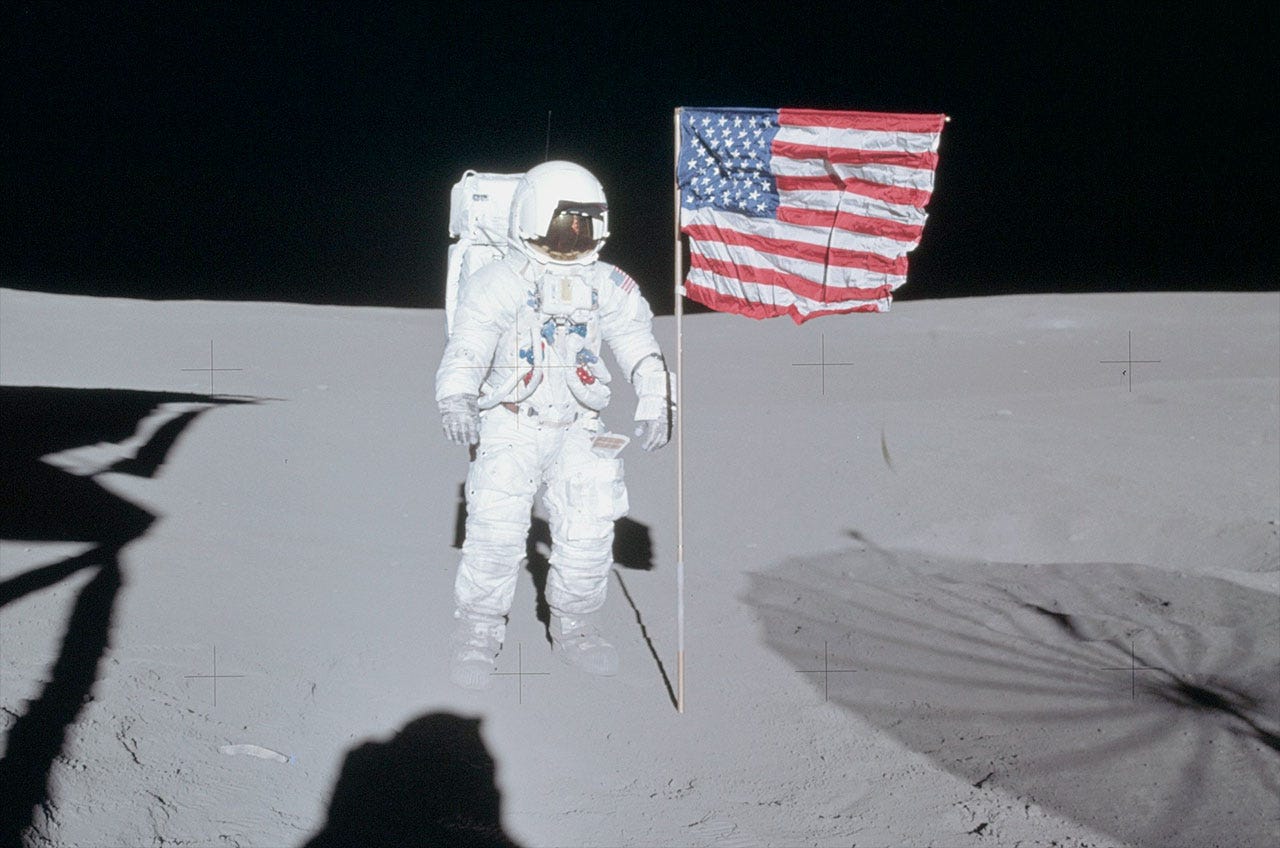
On his way home from the moon, Edgar Mitchell experienced a sense of unity that would shape the rest of his life.
In February 1971, the Apollo 14 astronaut became the sixth person to walk on the lunar surface.
Alongside commander Alan Shepard, he had spent his time there carrying out a demanding schedule of scientific work. On the return flight, with those responsibilities behind him, he finally had time to look outside.
In his memoir, The Way of the Explorer, Mitchell described the experience:
“What I saw out the window was all I had ever known, all I had ever loved and hated, longed for, all that I once thought had ever been and ever would be. It was all there suspended in the cosmos on that fragile little sphere. I experienced a grand epiphany accompanied by exhilaration... From that moment on, my life was irrevocably altered.”3
He went on to explain the moment in distinctly mystical terms:
“What I experienced during that three-day trip home was nothing short of an overwhelming sense of universal connectedness. I actually felt what has been described as an ecstasy of unity. It occurred to me that the molecules of my body and the molecules of the spacecraft itself were manufactured long ago in the furnace of one of the ancient stars that burned in the heavens about me. And there was the sense that our presence as space travelers, and the existence of the universe itself, was not accidental but that there was an intelligent process at work. I perceived the universe as in some way conscious.”3
Mitchell’s account became one of the most striking examples of what author Frank White would later call the overview effect. White introduced the term to describe the shift in awareness astronauts report when seeing Earth from space. Their accounts differ, but a recurring theme is the recognition of a shared planet whose visible wholeness made human divisions seem less fundamental.4
Back on Earth, Mitchell wanted to understand what had happened. He read widely and consulted people across scientific and spiritual traditions. Eventually, he found a resemblance in descriptions of samadhi, a state of consciousness discussed in Indian spiritual traditions.
Mitchell summarized the essence of samadhi:
“In Eastern thinking, this phenomenon is a moment in which an individual still recognizes the separateness of all things yet understands that the separateness is but an illusion. An essential unity is the benchmark reality, which is what the individual suddenly comes to comprehend. I recalled so vividly the separateness of the stars and planetary bodies on the way home from the moon, but simultaneously I knew I was an intimate part of the same process.”3
In October 1972, Mitchell resigned from NASA to fully immerse himself in the study of consciousness.
To that end, he founded the Institute of Noetic Sciences in 1973 to investigate altered states, psychic phenomena, and extraordinary religious experiences.
Inspired by a powerful mind-expanding experience, Mitchell had transformed from an explorer of outer space into an explorer of inner space.
Mitchell’s journey reminds us that sometimes a shift in perspective is all it takes to feel the interconnectedness we so often overlook.
3. A Picnic in the Universe

In 1977, Charles and Ray Eames released Powers of Ten, a short film that turns a picnic beside Lake Michigan into a journey through the universe.
The filmmakers set out to answer a tricky question: how do you make the vastness of the universe something people can grasp?5
The film begins with a couple lying on a picnic blanket, which covers a square one meter across. Then our viewpoint starts to withdraw. Every ten seconds, we look from ten times farther away, and the frame becomes ten times wider. The picnic shrinks into its surroundings. Soon the city is disappearing, followed by the familiar outlines of the planet.
The rule stays simple enough to follow while the distances become increasingly difficult to imagine. Earth recedes into the solar system. Eventually, our entire galaxy occupies only a small part of the view. The place where the film began has become impossible to distinguish.
Then the journey reverses.
We return across those enormous distances to the man on the blanket. But the movement continues, carrying us beneath the surface of his skin toward the microscopic structures of his body and, finally, the interior of a carbon atom.
The person who vanished into the immensity of space has become an immense landscape of his own.
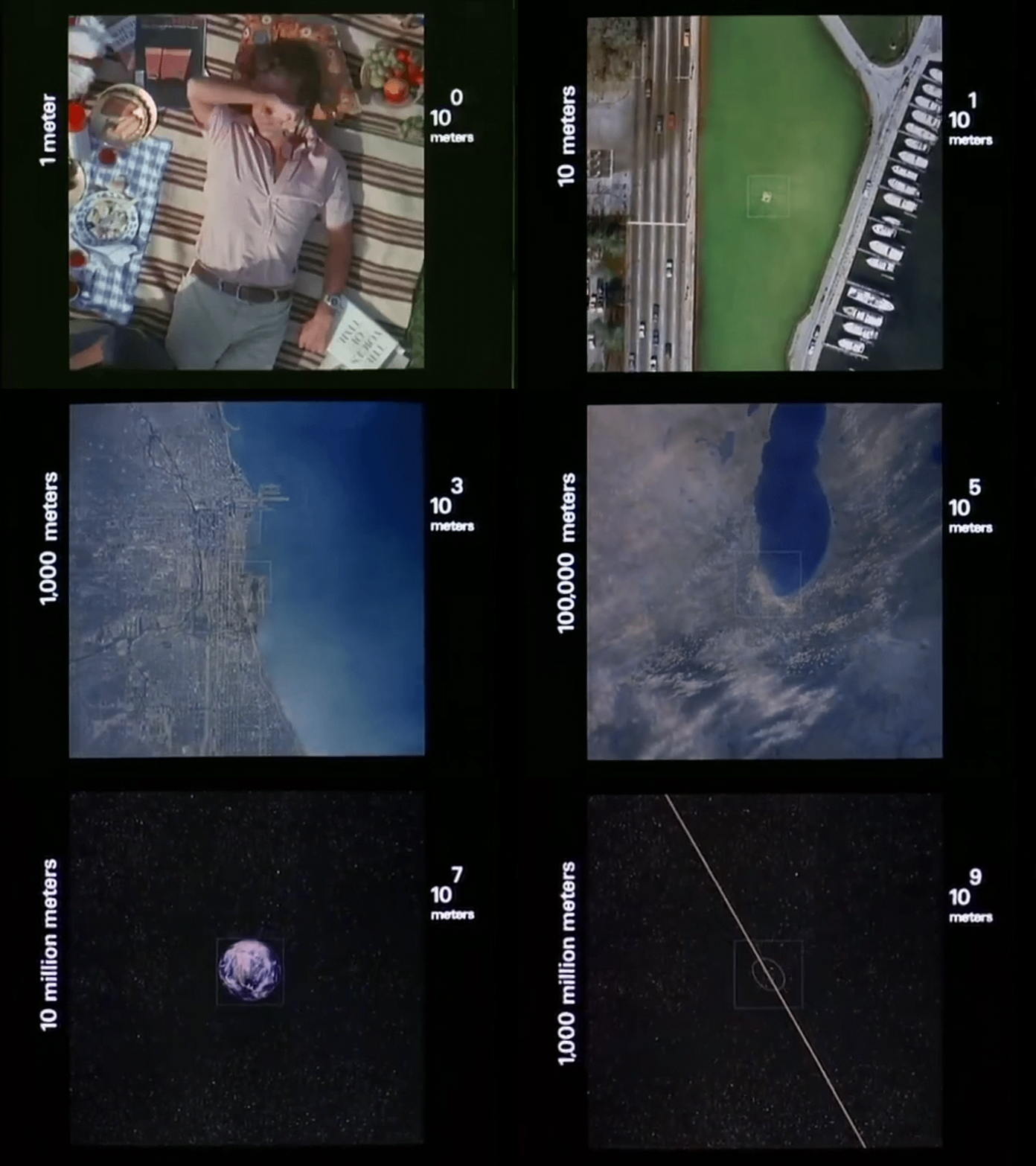
In roughly nine minutes, the Eameses reveal how much our sense of size depends on where we’re looking from. A human body is almost unimaginably small beside a galaxy, yet enormous compared with a single atom.
That perspective shift can carry emotional weight. Looking into the vastness of space, it is easy to feel insignificant. But smallness is a measurement, and significance is a question of meaning. Seeing ourselves as part and parcel of the universe can make that same vastness feel like something we belong to.
The inward journey adds another dimension to that feeling. Beneath the skin of an ordinary person lies a world of extraordinary complexity, far beyond what our eyes can see. The movement from the cosmic to the microscopic makes the familiar body feel newly mysterious.
By the end, the picnic is still a picnic. Yet the person on the blanket belongs to a universe that extends unimaginably far in either direction. For a moment, we get to appreciate ordinary human life within that extraordinary setting.
Similar to a psychedelic experience, the film invites us to feel our connection to something larger than ourselves, and to consider what that connection might ask of us.
Quotes
“Look again at that dot. That’s here. That’s home. That’s us.”
— Carl Sagan
“We do not ‘come into’ this world; we come out of it, as leaves from a tree.”
— Alan Watts
Trip Thought
A shower thought, but for psychedelics
If only everyone could travel to the moon and look back at Earth, perhaps we’d appreciate how interconnected we really are.
Alas, getting everyone to space might be logistically difficult, but psychedelics can help inspire a similar perspective shift.
Generally, we see our life through our own myopic, egoic vantage point, and it’s easy to feel separate. But if you simply zoom out enough, you realize that our separation is an illusion.
The hard part is remembering that connection when life starts to feel like everyone for themselves.
Returning to that wider perspective might remind us how much we depend on each other, and that caring for others, and our planet, is part of caring for ourselves.
Community Bulletin
🧠 Brooklyn Event: Join Brooklyn Psychedelic Society on November 8 for a lecture on the brain & consciousness, woven with live didgeridoo and somatic practice, flowing into a night of dance. Learn more and grab tickets here.
📚Books: Our friends at Synergetic Press publish psychedelic classics including Mystic Chemist, Birth of a Psychedelic Culture, and Zig Zag Zen: Buddhism & Psychedelics. Use code ARCHIVES20 for 20% off.
🧘Meditation App: The Way is a guided meditation program led by Zen master Henry Shukman, designed to help build a deeper, more consistent practice. Use this link for 30 days free.
Thanks for reading!
If something resonated with you, or if you have thoughts, questions, or ideas for future editions, I’d love to hear from you.
Just reply to this email. I read every response, and your feedback helps shape where this project goes next.
See you next week!
In psychedelic companionship,
- Kyle Sharp
There is a special feeling humans get when we positively connect to others.
It is euphoric.
Your article gives us further reason to understand why!
Perspective truly is everything