

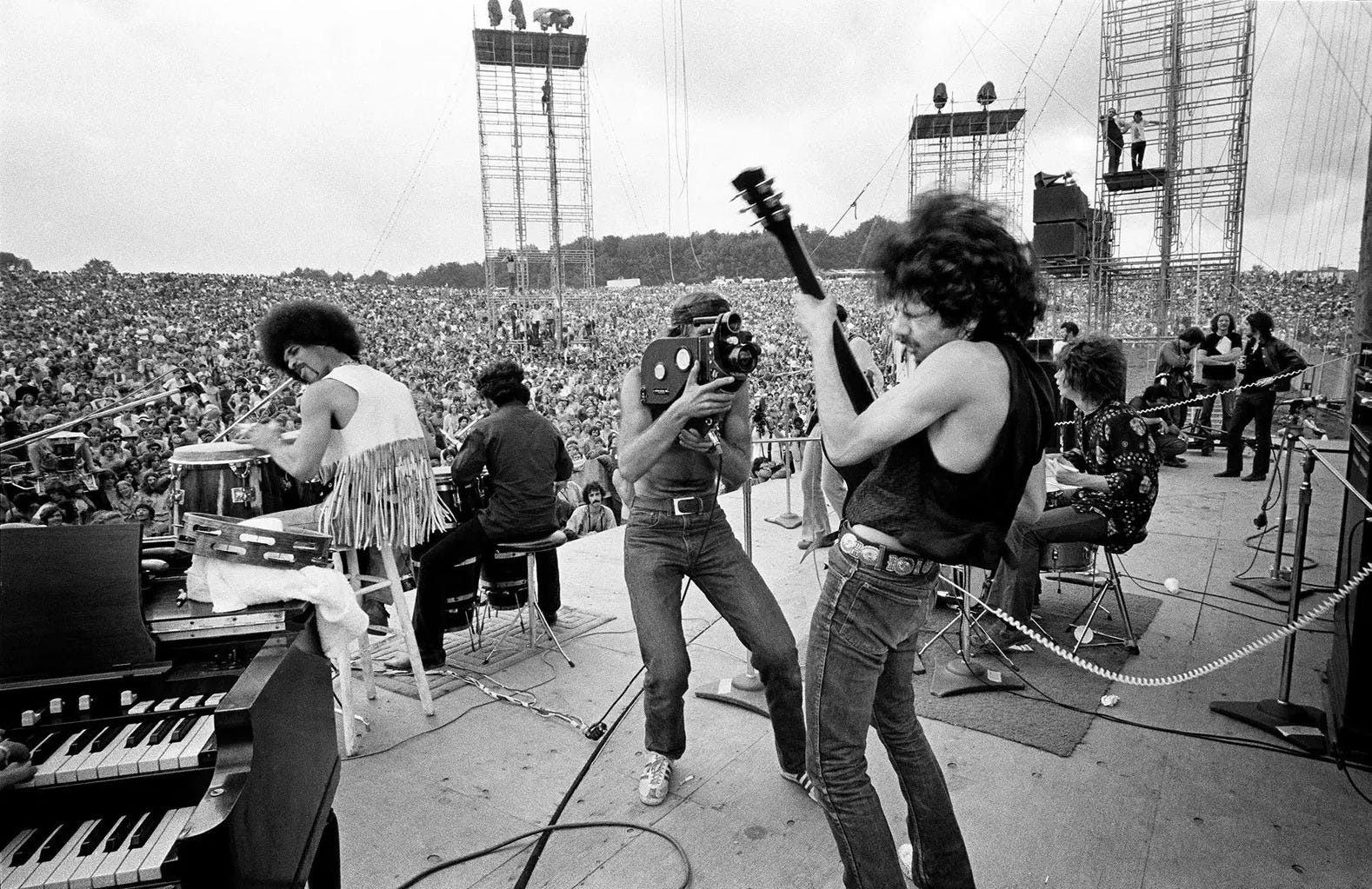
On the morning of August 16, 1969, Carlos Santana stepped off a helicopter and into a sea of half a million people.
He was 22 years old and preparing to play in front of the biggest crowd of his life.
The first face he saw was Jerry Garcia’s.
Garcia, in his easy way, asked what time Santana was going on. “Three in the morning,” Santana replied. Plenty of time.
Garcia smiled and offered him a gift: LSD.1
Santana took it casually. He figured he still had hours before the most important performance of his young career.
An hour later, he was in another dimension.
Suddenly, a stage manager came sprinting toward him. “There’s been a cancellation. You need to go on right now or you’re not going to play at all.”
“Oh my god,” Santana thought.
He later described the moment:
“It was a real test, and the test was, ‘You are higher than an astronaut’s butt right now.”2
Santana looked at himself and thought: “Am I going to be able to play? I can’t even touch my nose.”2
He took a breath and a prayer entered his mind:
“God please help me… Help me to stay in tune and in time.” 1
Then he walked onstage.
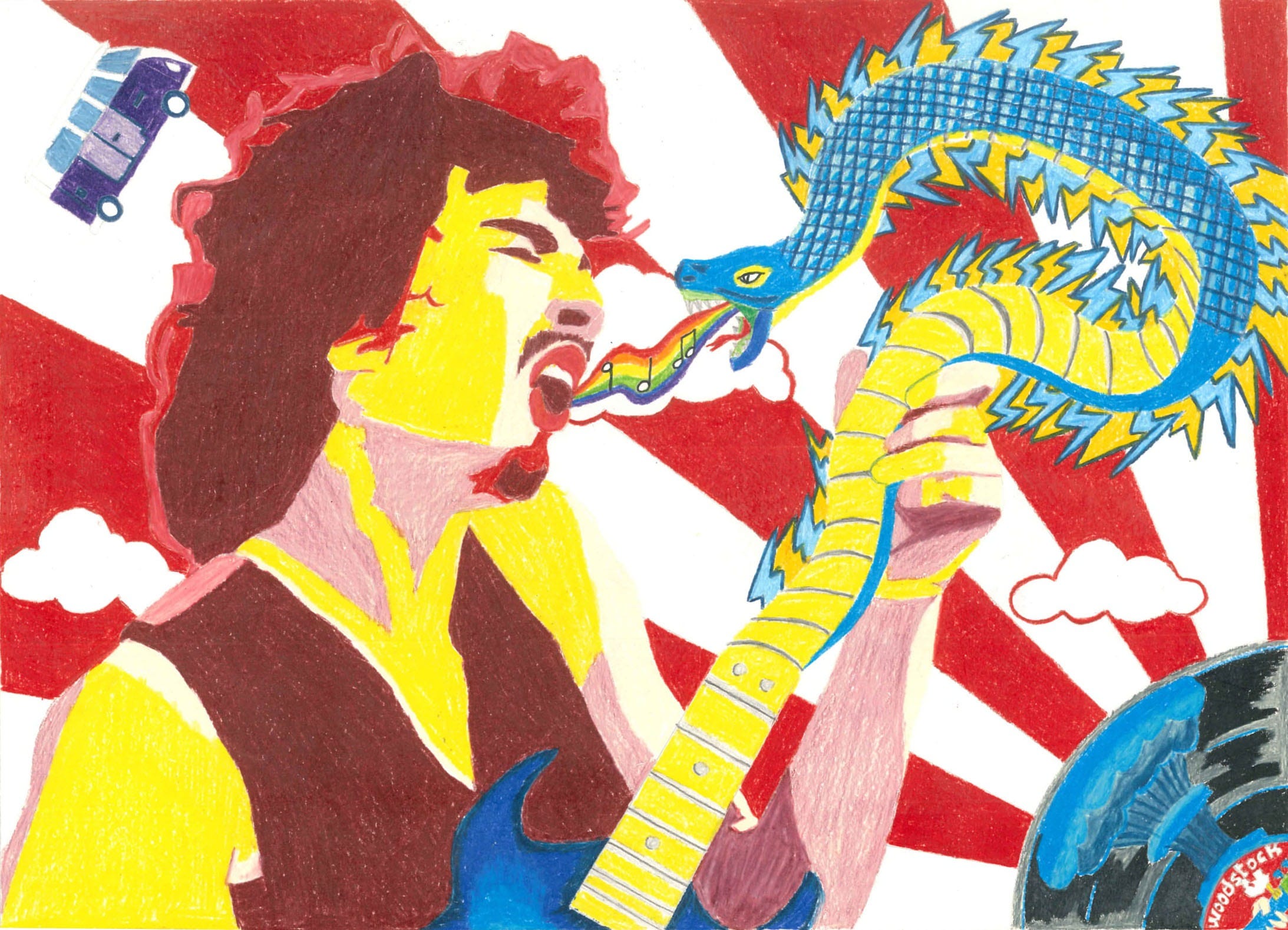
Once there, he looked down at his guitar neck and saw it transform into a writhing snake.
He wrestled the guitar-snake with complete intensity, trying to keep it steady as reality itself began to bend.
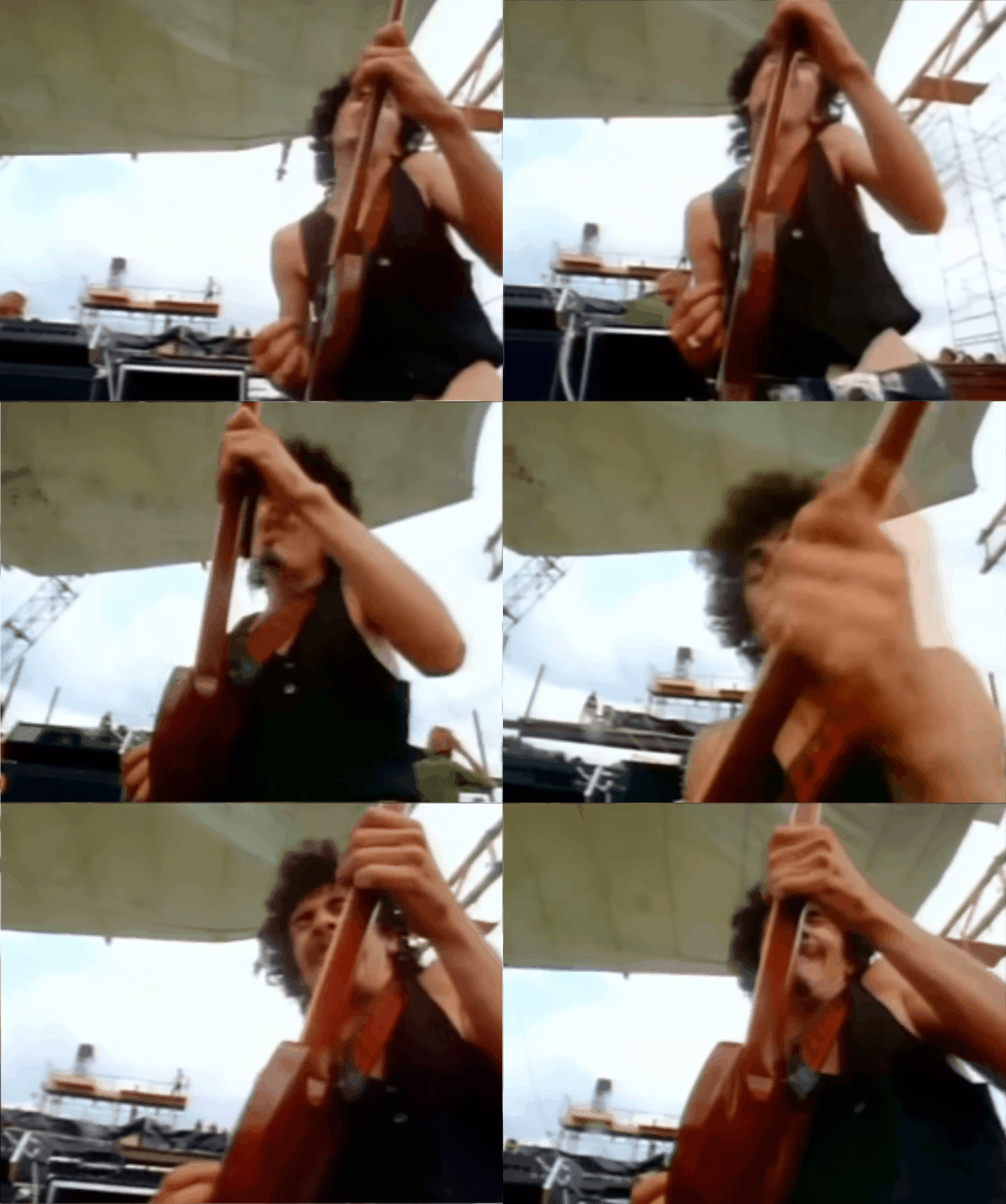
Far from falling apart, the performance was masterful. It became one of Woodstock’s defining moments and catapulted Santana to international fame.
For decades, the story has been told as evidence of psychedelic enhancement. A tale of LSD unlocking superhuman creativity.
But Santana’s Woodstock performance reveals something even deeper.
Viewed another way, it becomes a parable for understanding the psychedelic experience itself.
And at the center of that parable lies an ancient symbol: the snake.
The Paradox of the Snake
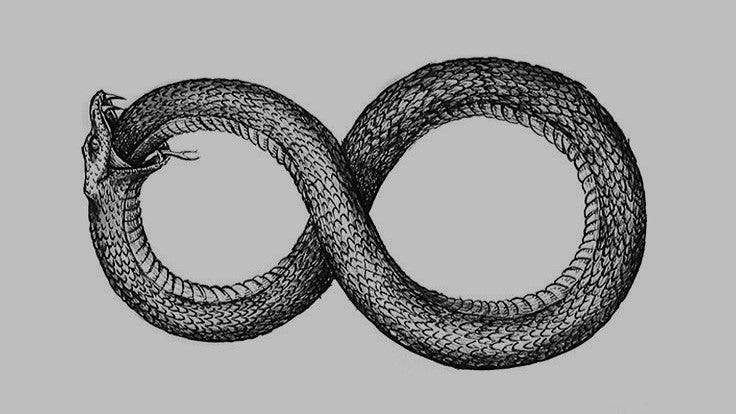
The snake is one of humanity’s oldest and most potent symbols.
Across traditions, snakes often embody opposites at once: good and evil, poison and healing, destruction and transformation.3
For example, in the Book of Genesis, the serpent tempts Adam and Eve to eat from the Tree of Knowledge, catalyzing humanity’s suffering and its awakening.4
Psychiatrist Carl Jung argued this paradoxical nature was central to understanding serpent symbolism.5 He observed that serpent imagery frequently emerges in dreams or visionary states when the psyche encounters conflicting forces that need to be integrated.
Santana’s guitar-snake is remarkably fitting in this context.
His LSD journey contained two possibilities at once. It carried the potential for panic and disorientation, and also for transcendence and creative breakthrough.
The challenge was not eliminating one side of the equation. It was learning how to hold both.
In this sense, Santana’s performance becomes a lesson in navigating the serpentine nature of the psychedelic experience.
Wrestling the Electric Snake
Santana later reflected on his Woodstock performance:
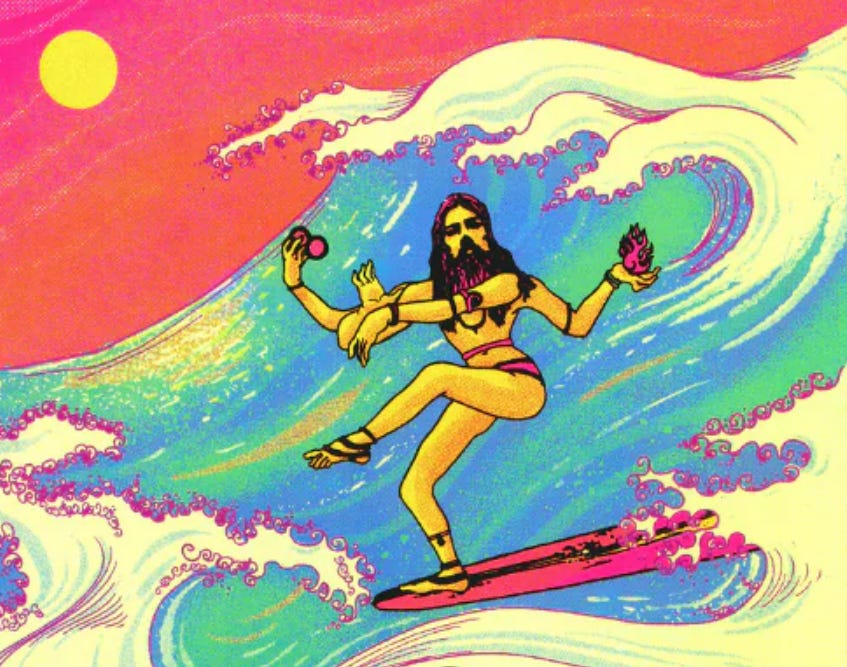
“I’m wrestling with the guitar — not wrestling in conflict, but like a surfer, wrestling to maintain and sustain a balance.”6
That distinction underscores a key takeaway from Santana’s performance:
Psychedelic experiences often go better when you stop fighting what’s happening and learn to move with it.
Or as meditation teacher Jon Kabat-Zinn puts it:
“You can’t stop the waves, but you can learn to surf.”7
Many difficult psychedelic experiences begin with resistance. Fear appears and we push it away. The experience starts moving in an unexpected direction and we tighten our grip.
Yet Santana’s performance reminds us that the way to navigate the tension of the paradox is not to resist it but to flow with it.
Santana did this by placing his faith in something larger than himself and trusting that his body knew what to do.
That detail is easy to miss, but it may be the most important part of the entire story.
Santana didn’t pray for the LSD to wear off or try to force himself back into ordinary consciousness.
He accepted the reality in front of him and trusted that some deeper intelligence knew how to proceed.
That shift from control to trust sits at the heart of navigating the psychedelic experience.
The Gift and the Cost of Transformation
In great myths, the moment of initiation is rarely the end of the story. The hero returns from the underworld changed, but that transformation brings with it a new set of challenges.
Woodstock marked the moment of initiation for Santana.
Before Woodstock, he was a little-known musician from San Francisco. After Woodstock, he transformed into a global superstar.
Yet, growth often comes with growing pains.
Years later, Santana reflected on the aftermath of his success:
“The more money we made and the more number ones we had on the radio, I thought I was losing my mind. I was becoming more and more depressed. After a while, the adulation that the world gives you can become very heavy on you. All of a sudden, you’re supposed to be this and you’re supposed to be that and I’m like, man, I just want to practice and make the music genuine, honest, sincere, and authentic. Make it true, you know?”8
There is another lesson about psychedelics hidden in this part of Santana’s story.
Psychedelics can catalyze profound transformation. They can open doors, reveal new possibilities, and alter the trajectory of a person’s life. But transformation can be disorienting, and the path that follows is rarely a straight line.
The psychedelic experience may unlock a new way of being, but growing into it can be challenging. Sometimes the most difficult part of the journey is not receiving the gift but learning how to carry it.
In many ways, that is where the deeper work begins.
Shedding the Skin

What makes Santana’s story especially intriguing is that the snake keeps returning later in his life.
In his memoir The Universal Tone, Santana reflected on his life journey:
“I used to be a very intense, compulsive person. I was always angry because my ego had convinced me that I was hopeless and worthless… I remember a long time ago in Mexico someone asked me, “What are you most afraid of?” I told him, “Disappointing God.” Now I realize there’s no way I could disappoint God because this isn’t an issue to him. It’s only an issue for my ego. What is an ego except something that thinks it’s separate from God? When I could understand that, I was like a snake shedding its skin. The old skin was guilt, shame, judgment, condemnation, fear. The new skin is beauty, elegance, excellence, grace, dignity.”9
The symbolism is striking.
The snake first appeared to Santana during one of the most important psychedelic experiences of his life. Decades later, the same symbol became his language for spiritual awakening.
Santana later put a finer point on the metaphor when discussing LSD itself:
“When you take [LSD], it’s like a snake shedding all beliefs. Under supervision, it’s actually very therapeutically healing for you.”1
For Santana, the snake was not simply a fleeting hallucination. It became a symbol that helped him make sense of a much longer journey of transformation.
The Psychedelic Myth
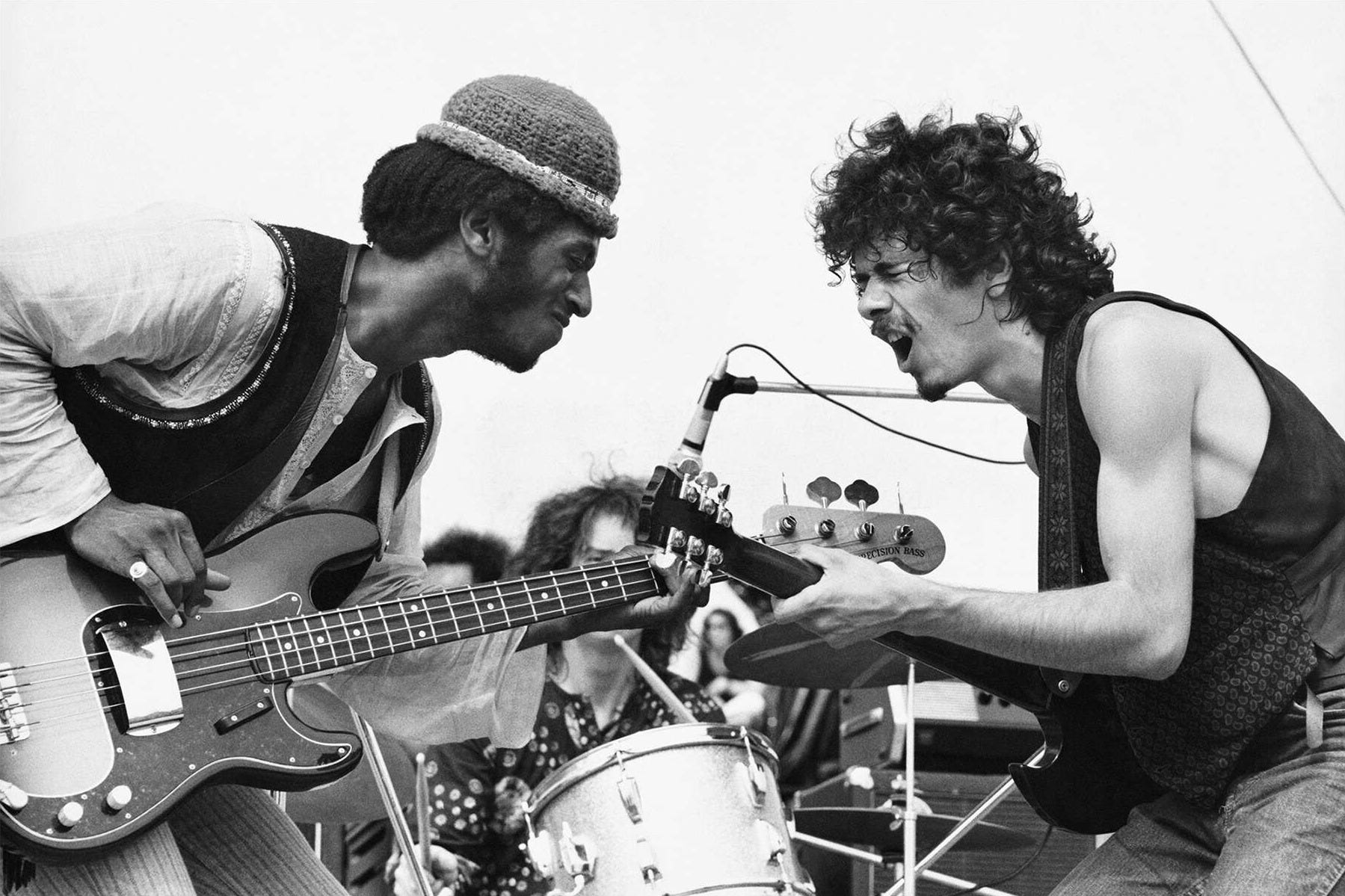
In many ways, Santana’s Woodstock performance is more than a remarkable rock story. It is a psychedelic myth in miniature.
A young musician takes a magic potion, enters another world, encounters a serpent, prays for guidance, surrenders control, and returns transformed.
In this myth, the guitar-snake symbolizes a deeper truth: psychedelics themselves are serpentine. They move in paradoxes. They carry fear and possibility, disorientation and insight, dissolution and renewal all at once.
The task with psychedelics is rarely to kill the snake or escape it. It is to learn how to hold steady in its presence and to trust what is deeper than the frightened ego’s need for control.
Importantly, the work of holding the paradox does not end when the psychedelic effects wear off. Psychedelics can open doors, but walking through them is a lifelong process.
As Santana later reflected:
“More and more I’m learning to bless my contradictions and my fears and transform them. More and more I want to use my guitar and my music to invite people to recognize the divinity and light that is in their DNA.”9
This points to an important lesson of Santana’s parable: psychedelic experiences can be profoundly transformative, but they do not free us from contradictions and fears. Instead, they invite us to bless them and gradually transform our relationship to them.
Years later, reflecting on Woodstock, Santana playfully defended psychedelics:
“I know people say, ‘Santana took too much acid.’ Well maybe you haven’t taken none at all! … I see what it can and should be.”6
Throughout his long, mythic journey, Santana has experienced both the gifts and burdens of psychedelic transformation.
In the end, his story offers a valuable map for meeting the unknown:
When the serpent appears, stay present. Let go if you can. Trust that something deeper may know how to proceed.
And pray, as Santana did, to stay in tune and in time.
Soul Sacrifice
If you’d like to see this psychedelic parable unfold in real time, watch Santana’s performance of “Soul Sacrifice” at Woodstock below.
An Homage to the Electric Snake
To honor this mythic moment, I designed a limited edition t-shirt inspired by Santana’s Woodstock performance:

This performance personally means a lot to me. It helped spark my fascination with altered states and has become a symbolic touchstone for how I think about the psychedelic experience.
I designed this piece to feel like a vintage rock concert tee with a psychedelic bent. The artwork brings Santana’s “electric snake” to life and nods to the legendary acid trip that inspired this entire essay.
If the spirit moves you, you can check out the tee here.
And whether or not you pick one up, I hope you’ve enjoyed the essay.
Much love,
Kyle
Great read, Santana and psychedelics are indeed a powerful symbiosis.
Highly recommend putting a Santana song on that trip playlist btw.
A very timely article for me, as I’m just reading How to Change Your Mind by Michael Pollan. Is the universe guiding me toward a psychedelic experience?!?