


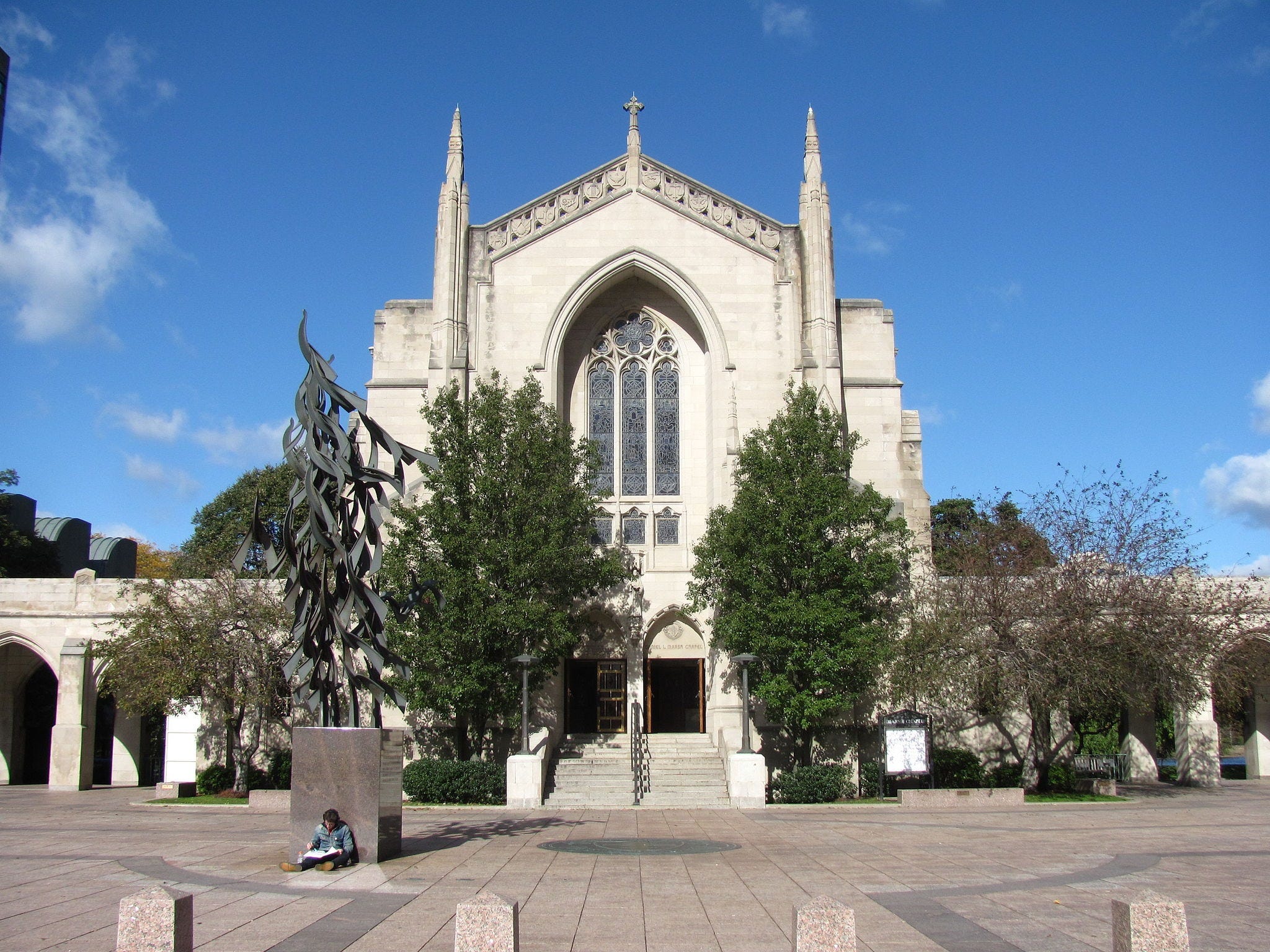
On a foggy Good Friday in 1962, something unusual happened inside Boston University’s Marsh Chapel.
Upstairs in the sanctuary, Rev. Howard Thurman delivered a powerful Good Friday sermon to a packed congregation.
Downstairs in the chapel basement, twenty Christian divinity students swallowed a small white capsule.
Half of the capsules contained psilocybin — the active compound in magic mushrooms. The other half contained a placebo.
The students sat quietly in pews as the three-hour Good Friday service was piped down through speakers from the sanctuary above them. Candles flickered. Light filtered through the stained-glass windows.
What followed would become one of the most famous and controversial studies in the history of psychedelic research.
It came to be known as the Good Friday Experiment, or the Marsh Chapel Experiment.
The study sought to answer two ambitious questions:1
Could psychedelics facilitate a genuine mystical experience?
And if so, would that experience lead to lasting changes in a person’s life?
At the time, these questions lived at the cutting edge of theology and psychology. But for the man who designed the study, they felt like the most natural questions in the world.
The Man Behind the Experiment
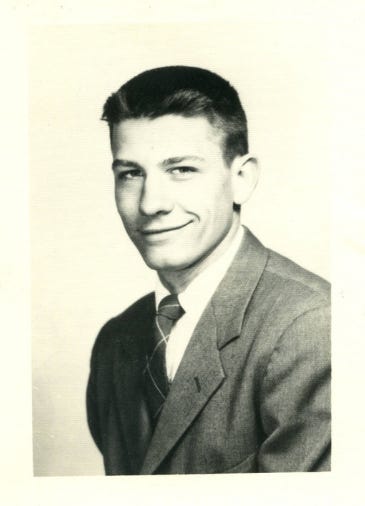
Walter Pahnke was not a typical graduate student.
Before beginning his Ph.D. in Religion and Society at Harvard, he had already earned a medical degree. His interests lived in a space few scholars were comfortable occupying — the intersection of medicine and spiritual experience.
In 1957, shortly before arriving at Harvard, Pahnke wrote Howard Thurman a letter revealing how deeply he cared about this line of inquiry:
“I have been feeling deep down… that, at last, I am on the right track in my search for God’s will for my life. When I think of the new horizons that may open up as I explore the interrelationships between medicine and religion, I can feel my enthusiasm and excitement growing.”2
At Harvard, Pahnke immersed himself in the writings of mystics across cultures. Again and again, he noticed a striking pattern.
Christian contemplatives, Sufi poets, Hindu yogis, and Buddhist meditators all described life-changing experiences with similar qualities — unity, timelessness, sacredness, ineffability, and a deep sense of joy.
The psychologist William James had written about such experiences decades earlier in The Varieties of Religious Experience. James observed that these states tend to arise unexpectedly during moments of prayer, meditation, crisis, or solitude.3
Because they arise spontaneously and cannot easily be summoned at will, mystical experiences had long resisted systematic scientific study.
Which raised a provocative question for Pahnke:
What if they could be properly studied under controlled conditions?
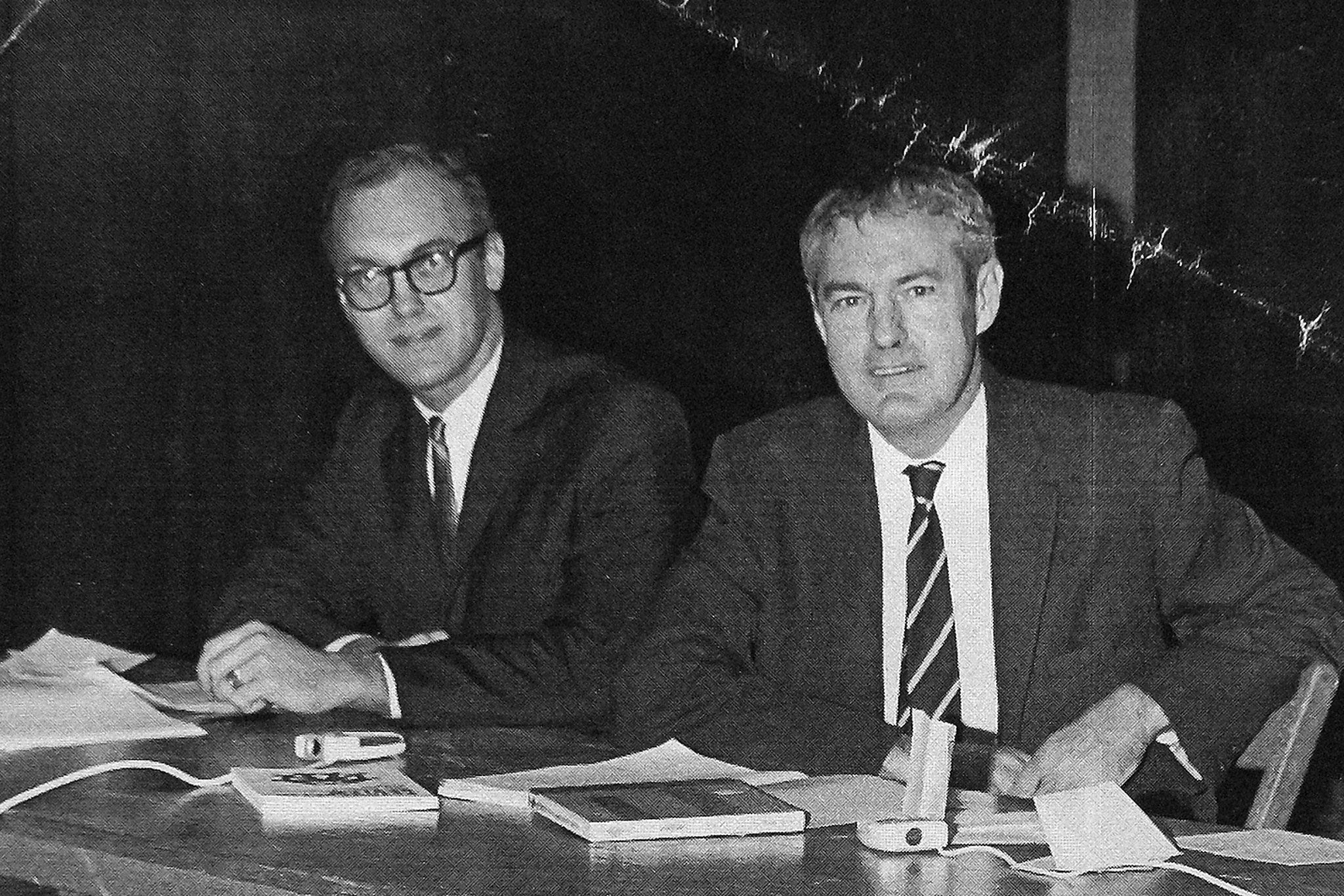
Around the same time, a new line of research was emerging at Harvard. Psychologists Timothy Leary and Richard Alpert had begun studying a little-known compound called psilocybin. Early reports suggested it could produce profound alterations of consciousness.
Pahnke had never taken psychedelics himself, but their potential intrigued him. If psilocybin could reliably evoke mystical states, it might offer a way to study religious experience scientifically for the first time.
So Pahnke enlisted Timothy Leary as his graduate advisor and proposed an ambitious project: a randomized, double-blind experiment that would administer psilocybin to volunteers and carefully measure the results.
But the study required something more than a laboratory.
It required the right setting.
Howard Thurman and the Ritual Setting
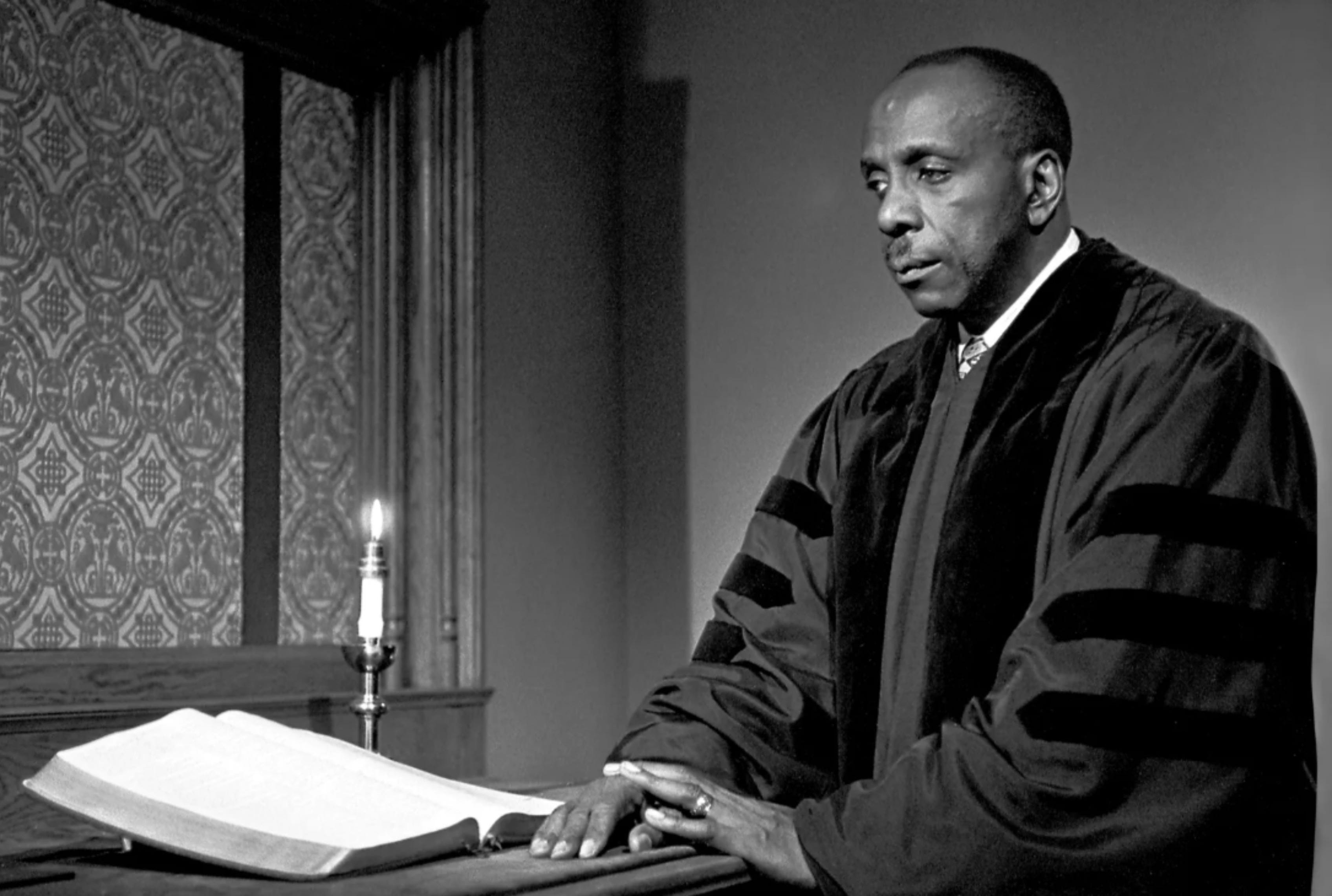
The experiment would never have happened without Howard Thurman.
Thurman was one of the most important religious figures of his era: a theologian, mystic, and civil rights thinker who had studied nonviolent resistance with Gandhi and later mentored Martin Luther King Jr. He also served as dean of Marsh Chapel at Boston University, becoming the first Black dean at a predominantly white university.
Thurman believed deeply in the transformative power of spiritual experience. He was interested in how religious encounters shape a person’s vocation, moral commitments, and sense of meaning.
He also happened to be personally close to Walter Pahnke. Thurman had even officiated Pahnke’s wedding.2
When Pahnke proposed conducting the experiment during the Good Friday service at Marsh Chapel, Thurman immediately understood the significance of the setting.
Good Friday commemorates the crucifixion — one of the most solemn and emotionally charged days in the Christian calendar. The service itself would already guide participants into a contemplative state.
If mystical experience were going to emerge anywhere, a Good Friday service seemed like exactly the kind of environment for it.
Thurman gave his permission.
Inside the Experiment

The experiment took place on April 20, 1962.
The participants were twenty Christian divinity students from Andover Newton Theological School. All were white. All were male. None had previously taken psilocybin or other psychedelics.1
Half received 30 milligrams of psilocybin.
The other half received nicotinic acid, an active placebo that produces bodily sensations such as tingling and flushing.
Before the service began, the students spent time with research assistants who prepared them for the experience.
They were encouraged to remain open to whatever arose. If the experience became strange or frightening, they were advised not to resist it.
“Go into the unexplored realms of experience,” the instructions read.1
Then the service began.
As Thurman preached upstairs, the participants sat below in a small chapel decorated with stained glass, pews, candles, and an altar.
At first, it must have felt like a quiet and reverent Good Friday service.
Then the psilocybin began to take hold.
What Happened in the Chapel
Some participants were flooded with awe. Others with terror. Some felt both.
One participant, S.J., later described a profound spiritual experience:
“Something extraordinary had taken place... All of a sudden, I felt drawn out into infinity, and I had lost touch with my mind. I felt that I was caught up in the vastness of Creation... [Rev. Howard Thurman] would say things about Jesus and you would have this overwhelming feeling of Jesus. It was like you totally penetrated what was being said and it penetrated you… We took such an infinitesimal amount of psilocybin, and yet it connected me to infinity.”4
Another participant, L.J., underwent a powerful confrontation with death:
“The more that I let go and sort of died, the more I felt this eternal life, saying to myself… ‘it has always been this way, it has always been this way.... O, isn’t it wonderful, there’s nothing to fear, this is what it means to die, or to taste of eternal life…’ And the more I died the more I appropriated this sense of eternal life.... Just in that one session I think I gained experience I didn’t have before and probably could never have gotten from a hundred hours of reading or a thousand hours of reading.”4
Others had more difficult experiences. One subject, L.R., recalled a wave of paranoia and fear:
“Shortly after receiving the capsule, all of a sudden I just wanted to laugh. I began to go into a very strong paranoid experience. And I found it to be scary. The chapel was dark and I hated it in there, just absolutely hated it in there… One of the things that was probably happening to me was a reluctance to just flow. I tried to resist that and as soon as resistance sets in there’s likely to be conflict and there’s likely, I think, for there to be anxiety.”4
Yet even he later said the experience involved a profound sense of “singleness, oneness,” and concluded that the state it produced was “very similar, parallel to, perhaps the same as a classical mystical experience.”4
The Moment the Experiment Broke Open
At one point in the sermon, Thurman proclaimed in his deep baritone voice:
“Go about the world! Tell everyone you meet that there’s a man on the cross!”5
One of the students on psilocybin took the instructions quite literally.
He stood up, stormed out of the chapel, and headed toward Commonwealth Avenue, determined to spread the word of Christ to strangers outside.
Huston Smith — the renowned scholar of religion who was serving as one of the study’s guides — chased after him.
But the student was outside, tripping, and on a mission. There was no chance he was going back willingly.
Smith later recalled that when he tried to restrain him, the student brushed off his grip “as if it were cobwebs.”6
The runaway subject soon encountered an unsuspecting postman delivering a letter to the dean of the theology school. He snatched the envelope and crumpled it in his hand.
At that point Smith and another guide physically subdued him and brought him back to the chapel, where Pahnke administered a tranquilizing injection of Thorazine.
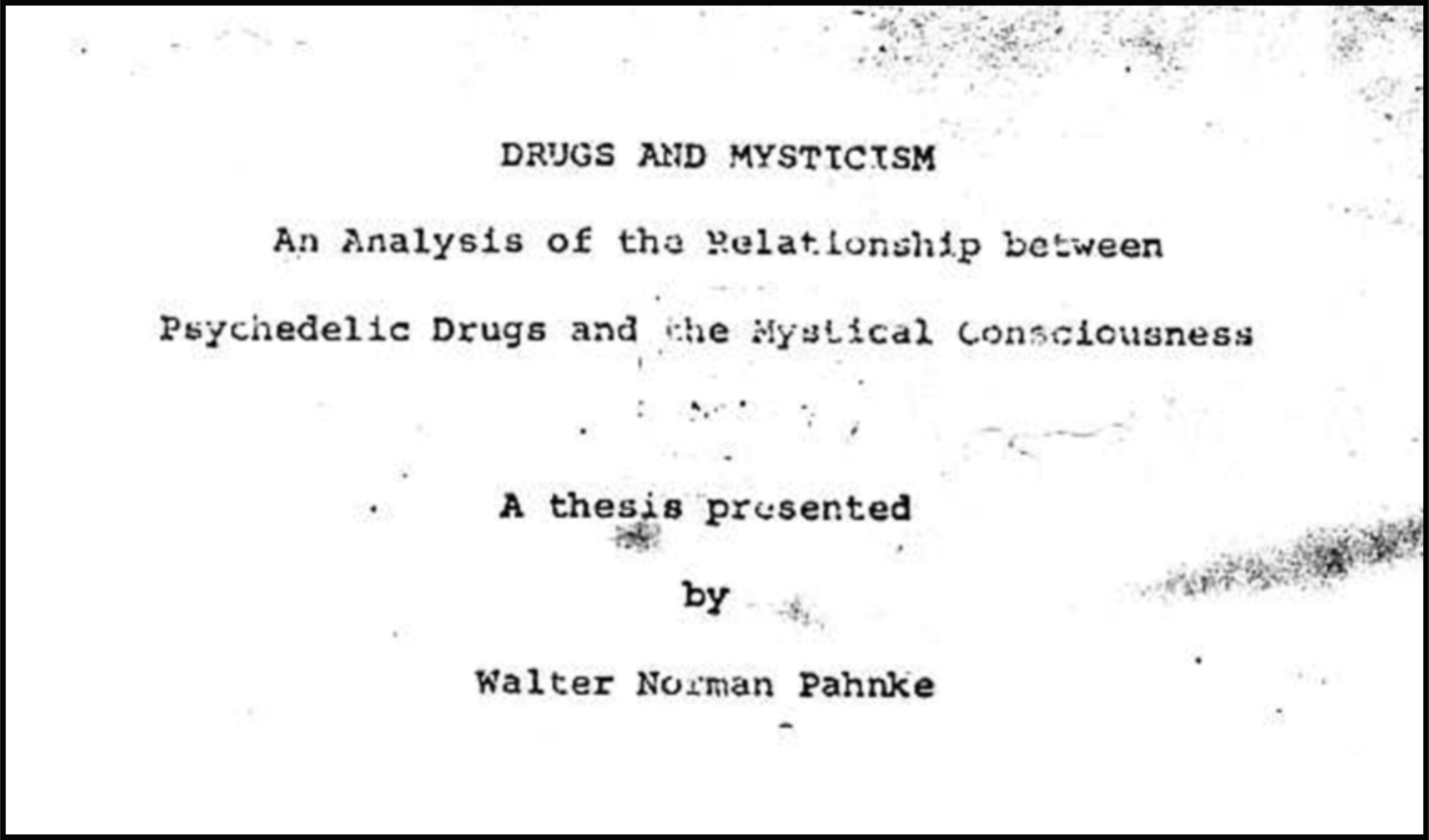
Curiously, this episode never appeared in Pahnke’s original thesis. That omission would matter later.
What the Study Found
The day after the Good Friday service, each participant completed an extensive questionnaire designed to determine whether they had undergone a genuine mystical experience.
After reviewing the mystical literature, Pahnke identified nine core features of mystical experience that he believed could be measured.
These included unity, transcendence of time and space, deeply felt positive mood, sacredness, objectivity and reality, paradoxicality, ineffability, transiency, and persisting positive changes in attitude or behavior.1
Participants were asked to rate a series of items on a scale from 0 to 4, where: 0 meant “Did not experience at all,” and 4 meant “Experienced strongly”.
Some of the items included:
“Feeling of unity with your group”
“Sense of having known the universe in its wholeness”
“Sense of presence of what was felt to be holy, sacred, or divine”
“Seeing a light which appeared to have no naturally explainable source”
Once the responses were compiled, the results were striking.
Eight of the ten psilocybin subjects scored high enough to qualify as having had mystical experiences. Only one of the participants in the control group did.1
In every category and in every specific question, the average score of the psilocybin subjects exceeded that of the control subjects.1
Pahnke concluded that psilocybin could induce states of consciousness “apparently indistinguishable from, if not identical with, those experienced by the mystics.”1
Six months later, the participants did a follow-up questionnaire. The psilocybin subjects reported more enduring positive changes in attitude and behavior than the control group.
According to Pahnke, the students that had taken psilocybin “felt that this experience had motivated them to appreciate more deeply the meaning of their lives, to gain more depth and authenticity in ordinary living, and to rethink their philosophies of life and values.”1
Timothy Leary later joked:
“It was probably the greatest Good Friday in two thousand years — or it was for half of the subjects.”7
How the World Reacted
The study appeared at a volatile cultural moment.
To supporters, it seemed to offer something remarkable: a serious scientific attempt to study mystical experience.
Walter Houston Clark, one of the major psychologists of religion of the time, wrote, “there are no experiments known to me in the history of the scientific study of religion better designed or clearer in their conclusions than this one.”8
The press took notice as well. Time magazine ran a story titled “Mysticism in the Lab.”9 But the media often exaggerated the results.
Headlines suggested that all participants had experienced breezy, mystical enlightenment — a far cleaner story than the messy reality of awe, fear, confusion, and transformation reported by the subjects themselves.
Meanwhile, the American establishment was beginning to turn against psychedelics.
Despite the promising results of the experiment, Leary recalled how difficult it was for Pahnke to get permission and funding for follow-up research:
“We remembered Huxley’s observation that the original sin was the ingestion of a brain-change fruit in the Garden… There was not much chance that the bureaucrats of Christian America were going to accept our research results, no matter how objective. We had run up against the Judeo-Christian commitment to one God, one religion, one reality that has cursed Europe for centuries and America since our founding days.”10
Before Pahnke could conduct follow-up studies, he died tragically in a scuba diving accident in 1971.
Without its original steward, the Good Friday Experiment slowly faded into a curious historical relic.
Rick Doblin Reopens the Case

More than two decades later, an undergraduate named Rick Doblin was trying to decide what to study for his senior thesis.
What he really wanted to do was psychedelic research. But by the 1980s, that line of work had been completely shut down. Obtaining approval to administer psychedelics in new experiments was essentially impossible.
So instead of trying to run a new study, he decided to revisit an old one.
William James had argued that the real test of a mystical experience was its fruits — the lasting changes it produced in a person’s life.
Doblin wanted to know what had happened to the Good Friday participants decades later. His plan was to ask the long-term follow-up questions that Walter Pahnke had never been able to.
Tracking down the participants, however, proved difficult.
No records seemed to exist. Doblin visited Andover Newton, where the original student volunteers had studied, and asked if he could place a note in the alumni newsletter. To his surprise, the school refused.11
He tried every official channel and got nowhere. So he became a detective.
While searching the Andover Newton library, Doblin eventually discovered a dusty alumni directory listing hundreds of students from 1962. He photocopied the entire list and mailed postcards to every name.
Three wrote back saying they had been part of the study.
Over the next several years, Doblin managed to track down nineteen of the twenty original participants.
That alone is an incredible part of the story. The most important follow-up to one of the most famous psychedelic studies ever conducted was not carried out by some well-funded institution. It was accomplished by sheer persistence.
What Happened to the Participants
What Doblin found was remarkable.
Even after twenty-five years, the psilocybin subjects vividly remembered their Good Friday experience. Many described it as one of the most meaningful events of their lives.4
The control subjects, by contrast, remembered little about the service.
One participant, K.B., described how the psilocybin experience permanently altered his sense of reality:
“It left me with a completely unquestioned certainty that there is an environment bigger than the one I’m conscious of. I have my own interpretation of what that is, but it went from a theoretical proposition to an experiential one… What I had thought on the basis of reading and teaching was there. I knew it. Somehow it was much more real to me... I expect things from meditation and prayer and so forth that I might have been a bit more skeptical about before... I have gotten help with problems, and at times, I think direction and guidance in problem-solving. Somehow my life has been different knowing that there is something out there... What I saw wasn’t anything entirely surprising and yet there was a powerful impact from having seen it.”4
Another participant, T.B., reflected on how his experience of death during the session reshaped his political courage:
“When you get a clear vision of what [death] is and have sort of been there, and have left the self, left the body… you would also know that marching in the Civil Rights Movement or against the Vietnam War in Washington [is less fearful].... In a sense [it takes away the fear of dying]... because you’ve already been there.”4
For S.J., the experience of unity translated directly into social engagement:
“I got very involved with civil rights after that [his psychedelic experience] and spent some time in the South. I remember this unity business, I thought there was some link there.... There could have been. People certainly don’t write about it. They write about it the opposite way, that drugs are an escape from social obligations. That is the popular view....”4
Across the interviews, a consistent pattern emerged.
Participants spoke about a deepened appreciation of life and nature, a renewed sense of joy, and a stronger commitment to their religious or professional vocations. Many described becoming more open to other religious traditions and more resilient during periods of personal crisis. Several reported feeling a greater sense of solidarity with marginalized groups and with humanity more broadly.
Only one of the control subjects reported meaningful personal growth from the Good Friday service. Ironically, he felt the most important thing he took away from the experience was the decision to try psychedelics at the earliest opportunity.
Doblin ultimately concluded that “each of the psilocybin subjects felt that the experience had significantly affected his life in a positive way and expressed appreciation for having participated in the experiment.”4
However, that wasn’t the entire story.
What the Original Study Left Out
Doblin’s research did more than confirm the original findings. It also complicated the myth.
In Pahnke’s original thesis, the Good Friday Experiment appeared overwhelmingly positive. But when Doblin interviewed the participants decades later, a more nuanced picture emerged.
Only two psilocybin subjects described their experience as entirely positive from beginning to end. Most reported moments when they “feared they were either going crazy, dying, or were too weak for the ordeal they were experiencing.”4
Yet these struggles were often part of the mystical experience itself. Many participants said that moving through these difficult moments ultimately contributed to the insight and personal growth they later described.
Still, these darker aspects of the experience had been largely underemphasized in Pahnke’s original account.
One participant, H.R., remarked during Doblin’s interview:
“The other thing I found unique that wasn’t talked at all about in what I read, at least in the thesis, was that it was all on the positive up side. I don’t know whether other people have said this but I had a down side.... It was a roller coaster.... I mean I had a very strong positive sense of the whole... one with humanity kind of positive glowing, unity kind of feeling and then I went down to the bottom where I was really just guilt... that’s all I can say. It was a very, very profound sense of guilt.”4
Doblin’s interviews also revealed another detail absent from the original thesis.
In his report, Pahnke noted that injectable Thorazine was available in case of emergency. What he did not mention was that it had actually been used. That incident only came to light decades later through Doblin’s follow-up.
Doblin speculated that Pahnke may have omitted the episode because he feared it would provide ammunition to critics of psychedelic research, which was already under growing public scrutiny.4
Ironically, minimizing the difficult aspects of the psychedelic experiences may have had unintended consequences. By emphasizing only the positive outcomes, the study may have left readers less prepared for the intense and sometimes frightening psychological states psychedelics can produce.
In that sense, Doblin’s follow-up did something important. It preserved the experiment’s remarkable findings while restoring a more realistic picture of what actually happened inside the chapel that day.
The Legacy of the Experiment
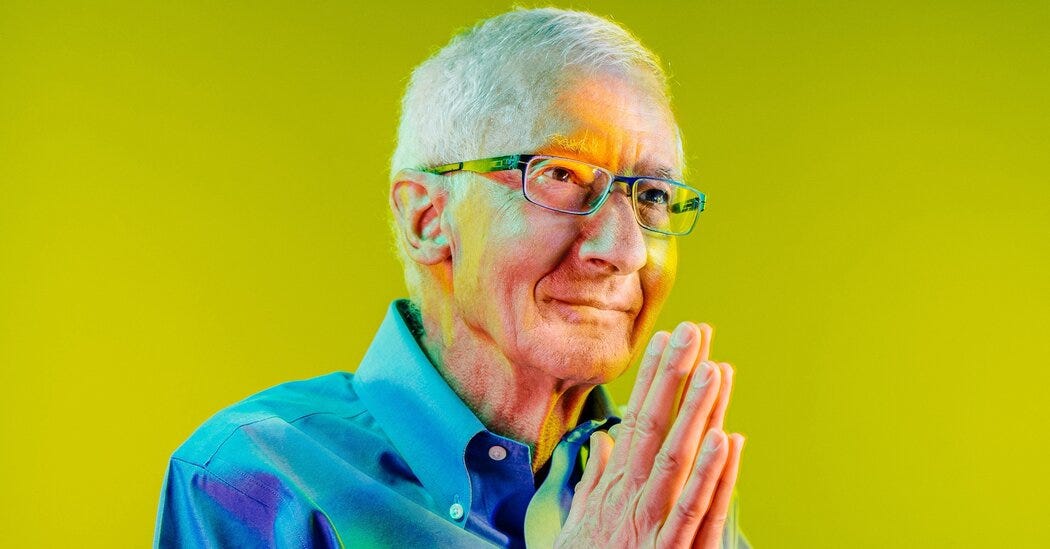
Decades later, modern research returned to the same question.
In 2006, a landmark study led by Roland Griffiths at Johns Hopkins University found that psilocybin could reliably produce mystical-type experiences that participants described as among the most meaningful events of their lives. The researchers also found that the depth of the mystical experience strongly predicted long-term positive psychological change, suggesting that these states themselves may play a central role in lasting transformation.12
Nearly twenty years after that, the question was extended into a broader interfaith setting. In 2025, a study led by Anthony Bossis and Stephen Ross at New York University invited clergy from several major world religions to undergo guided psilocybin sessions. The results suggested that carefully supported psychedelic experiences could deepen spiritual life across traditions, not just within a single Christian setting.13
In this sense, modern science has quietly picked up the thread that Walter Pahnke began.
The Door the Experiment Opened
The Good Friday Experiment sits at an unusual intersection between science and religion.
It suggests that the kinds of experiences described in scripture, mystical literature, and spiritual traditions may not belong solely to saints or ascetics.
Under the right conditions, they may be part of the ordinary possibilities of human consciousness.
But the experiment also reminds us that mystical experience is not always gentle.
It can involve panic, surrender, confrontation with death, and the unsettling feeling that one’s ordinary understanding of reality is dissolving.
Yet those very struggles may be part of what makes the experience transformative.
As Walter Pahnke later observed, “perhaps the hardest work comes after the experience, which itself may only provide the motivation for future efforts to integrate and appreciate what has been learned.”1
The real task is bringing whatever insight emerged back into ordinary life.
More than sixty years later, the Good Friday Experiment still raises a lingering question:
What do we do with our mystical experiences?
Because if such moments truly have the power to reshape how we understand life, death, and meaning, they may deserve far more attention than modern life typically gives them.
this was so great. that the experiment took place on April 20! lol (also that's my birthday. but 20 ys later)
Its amazing in the way you tell this story, it makes the Marsh Chapel experiment feel like a hinge between worlds, stitching together mysticism, medicine, and civil‑rights era theology in one foggy Good Friday.
I really liked that you hold both halves of the truth at once: psilocybin reliably occasioning Jamesian “mystical‑type” experiences with long‑term fruits, and the messy realities of panic, guilt, Thorazine, and the runaway seminarian that early write‑ups smoothed over.
By ending with the question of what we actually do with these encounters once the candles are out, you turn a legendary study back on the reader’s own unintegrated mystical moments.
Great Read