

Welcome to The Weekly Archive, a short trip through psychedelic history.
By 1967, the Beatles had gone from clean-cut pop sensations to pioneers of the psychedelic counterculture.
This week, we’re exploring how LSD transformed the band’s music and spiritual outlook.
Here are 3 artifacts, 2 quotes, and 1 trip thought for the journey.
Artifacts:
1. The Coffee That Changed the Beatles
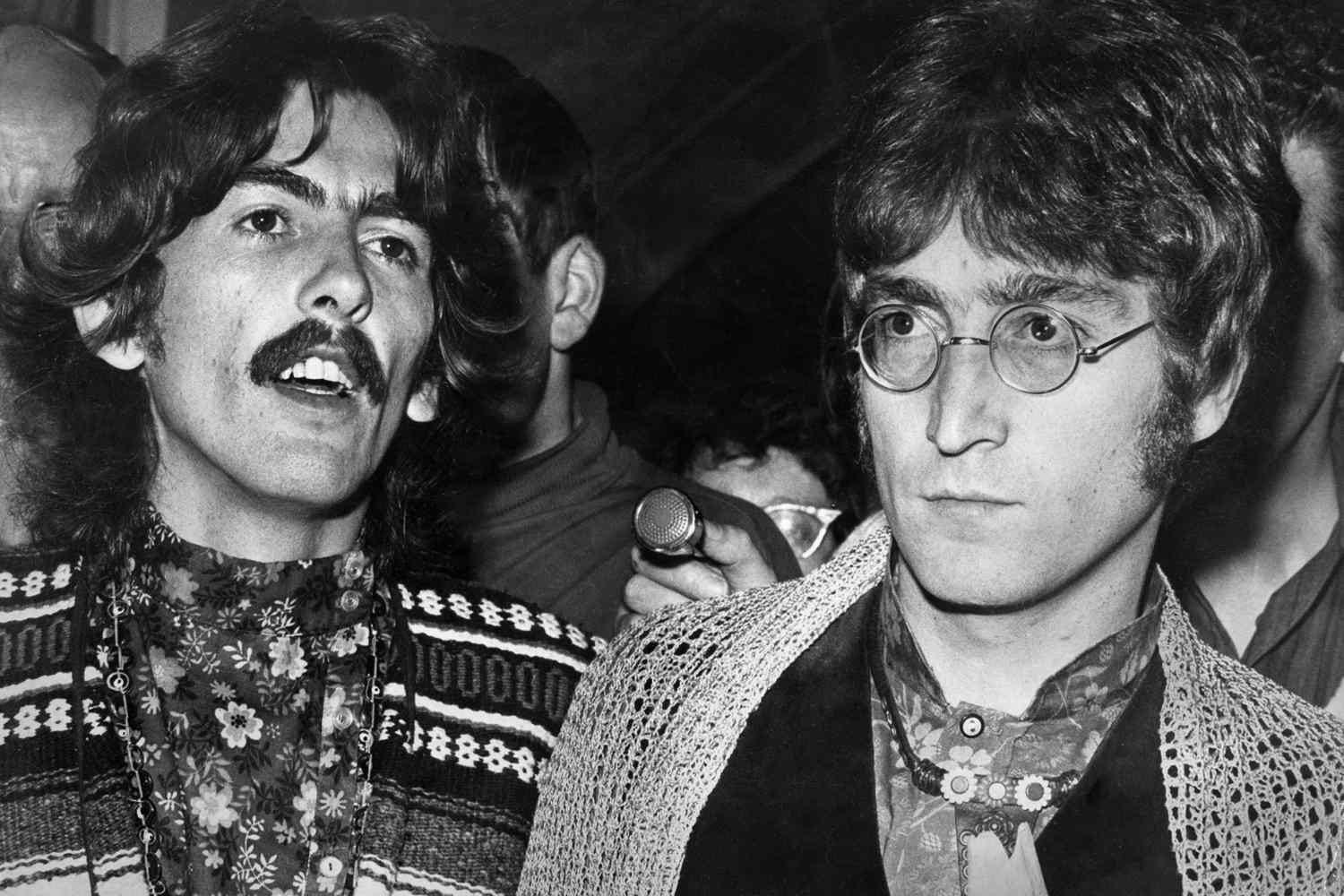
The Beatles’ psychedelic revolution began with a dentist secretly putting LSD in their coffee.
In April 1965, John Lennon, George Harrison, and their partners, Cynthia Lennon and Pattie Boyd, were having dinner at the London home of Geoge’s dentist John Riley.
After dinner, the group planned to visit the Pickwick Club to watch their friend Klaus Voormann perform. But Riley insisted they stay for coffee.
John and George initially assumed the Dentist wanted to keep them for an orgy.
When they finally got up to leave, Riley revealed that he’d dosed their drinks with acid.
George recalled his reaction: “Well, what’s that? So what? Let’s go!”1
None of them had taken LSD before. They had little idea what awaited them.
As the drug began taking effect, they made their way to the club, where the evening grew increasingly surreal.
As Lennon remembered it,
“We were just insane. We were just out of our heads. We all thought there was a fire in the lift, but it was just a little red light, and we were all screaming, all hot and hysterical!”2
While John started freaking out, George had an entirely different experience.
“I had such an overwhelming feeling of well-being, that there was a God, and I could see him in every blade of grass… It was like gaining hundreds of years of experience in 12 hours.”3
The night ended at George’s house in Esher, where John was beginning to reconsider his attitude toward acid:
“God, it was just terrifying, but it was fantastic, George’s house seemed to be just like a big submarine.”2
For Lennon and Harrison, that accidental trip marked the beginning of a profound transformation. The experience also created a strange distance between the bandmates.
As Harrison later explained:
“John and I had decided that Paul and Ringo had to have acid because we couldn’t relate to them any more. Not just on the one level, we couldn’t relate to them on any level because acid had changed us so much.”3
Ringo eventually tried LSD later that summer, while Paul initially resisted. By the end of 1965, all four had experienced the drug.4
The changes soon became apparent in their music, particularly on Revolver (1966), and Sgt. Pepper’s Lonely Hearts Club Band (1967).
Their songwriting became increasingly introspective. Their arrangements grew more experimental. Their interests expanded toward Indian philosophy, spirituality, and the mysteries of consciousness.
Of course, LSD was only one influence on their evolution. Indian music, new recording technology, and the Beatles’ own extraordinary creativity were equally important.
Still, the experience seemed to have given the Beatles permission to question assumptions they had previously taken for granted.
A cup of coffee had opened a door. The Beatles would spend the next several years exploring what lay beyond it.
2. “Tomorrow Never Knows”: Turning LSD Into Sound
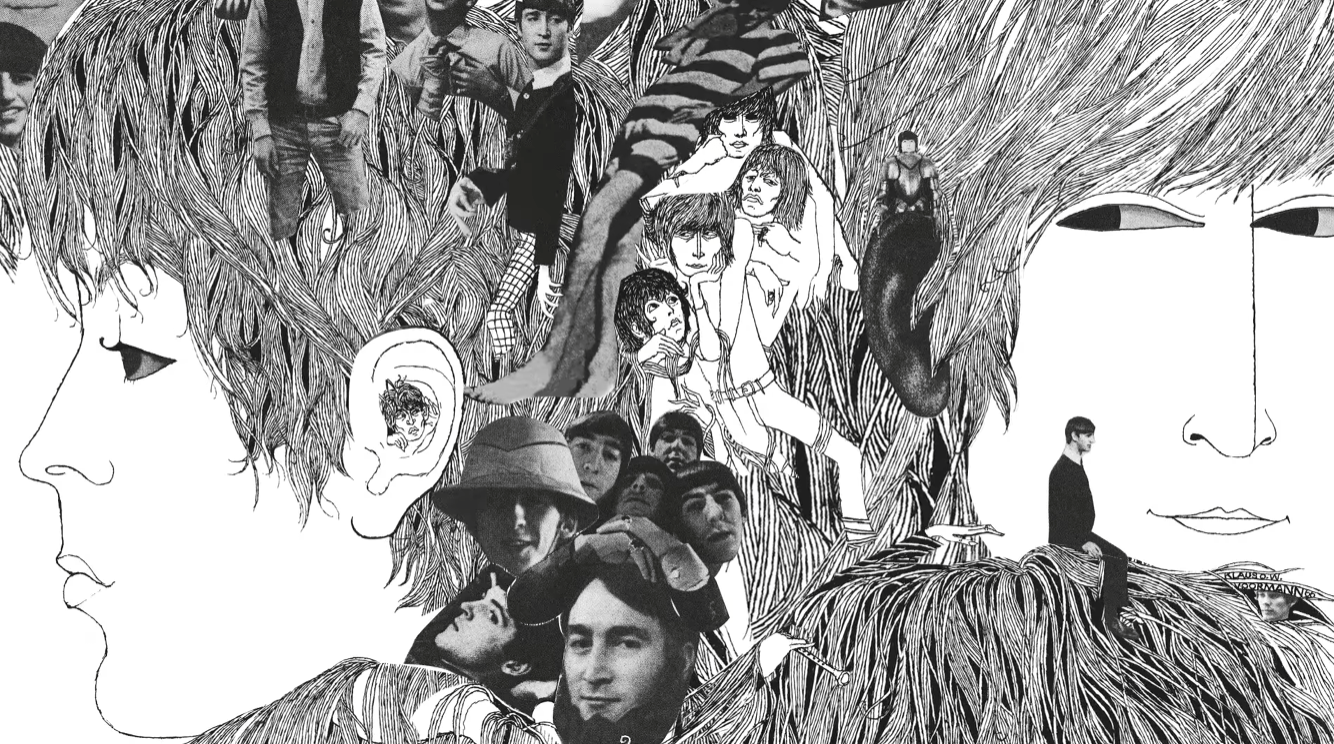
What would it sound like if you could turn an LSD trip into music?
In 1966, John Lennon stumbled upon an esoteric spiritual guidebook at London’s Indica bookshop: The Psychedelic Experience (1964), by Timothy Leary, Ralph Metzner, and Richard Alpert. It adapted the Tibetan Book of the Dead, a Buddhist text about death and rebirth, into instructions for navigating a psychedelic trip.5
Lennon’s first encounter with LSD, courtesy of George’s dentist, had been both terrifying and fascinating. The Psychedelic Experience offered a way of returning to that mysterious terrain with greater intention.
The book presented “ego death” as an opportunity for spiritual insight. Its instructions encouraged readers to surrender when familiar reality began slipping away.
According to biographer Albert Goldman, Lennon recorded himself reading those instructions in his attic studio, adapting the passage to address himself directly:
“O John Lennon
The time has come for you to seek new levels of reality.
Your ego and the rock and roll game are about to cease.
You are about to set face to face with the Clear Light.”6
Then he took LSD and listened to his own voice guide him through the experience. Lennon emerged enthralled, eager to translate what he had encountered into music.
Lennon later recalled taking LSD while following Timothy Leary’s instructions in The Psychedelic Experience:
“I did it just like he said in the book, and then I wrote ‘Tomorrow Never Knows.’”7
The psychedelic manual pulses through every lyric of the song. The opening invitation, “Turn off your mind, relax and float downstream,” comes directly from its pages.
The harder task was making the music itself feel like a trip.
Leary’s book also described strange sounds sometimes encountered on LSD, including “swooshing, crackling and pounding noises.” These descriptions offered a kind of sonic blueprint for “Tomorrow Never Knows.” The idea was to recreate the atmosphere of an acid trip, giving listeners a sense of the altered state Lennon was singing about.
To achieve this, the Beatles experimented with recording techniques that pushed the limits of the studio. Paul McCartney’s sped-up tape loops produced seagull-like cries. A backward guitar solo seemed to reverse time. Ringo’s pounding drums and George Harrison’s hypnotic tambura drone anchored the chaos.8
Lennon’s voice was fed through a rotating Leslie speaker, giving it an eerie, disembodied quality, as though he were delivering instructions from another dimension.
The result sounded unlike anything the Beatles had recorded before.
“Tomorrow Never Knows” revealed how LSD was expanding their musical and philosophical horizons, inspiring them to explore consciousness, the nature of the self, and what a pop song could express.
3. From Acid to the Ashram
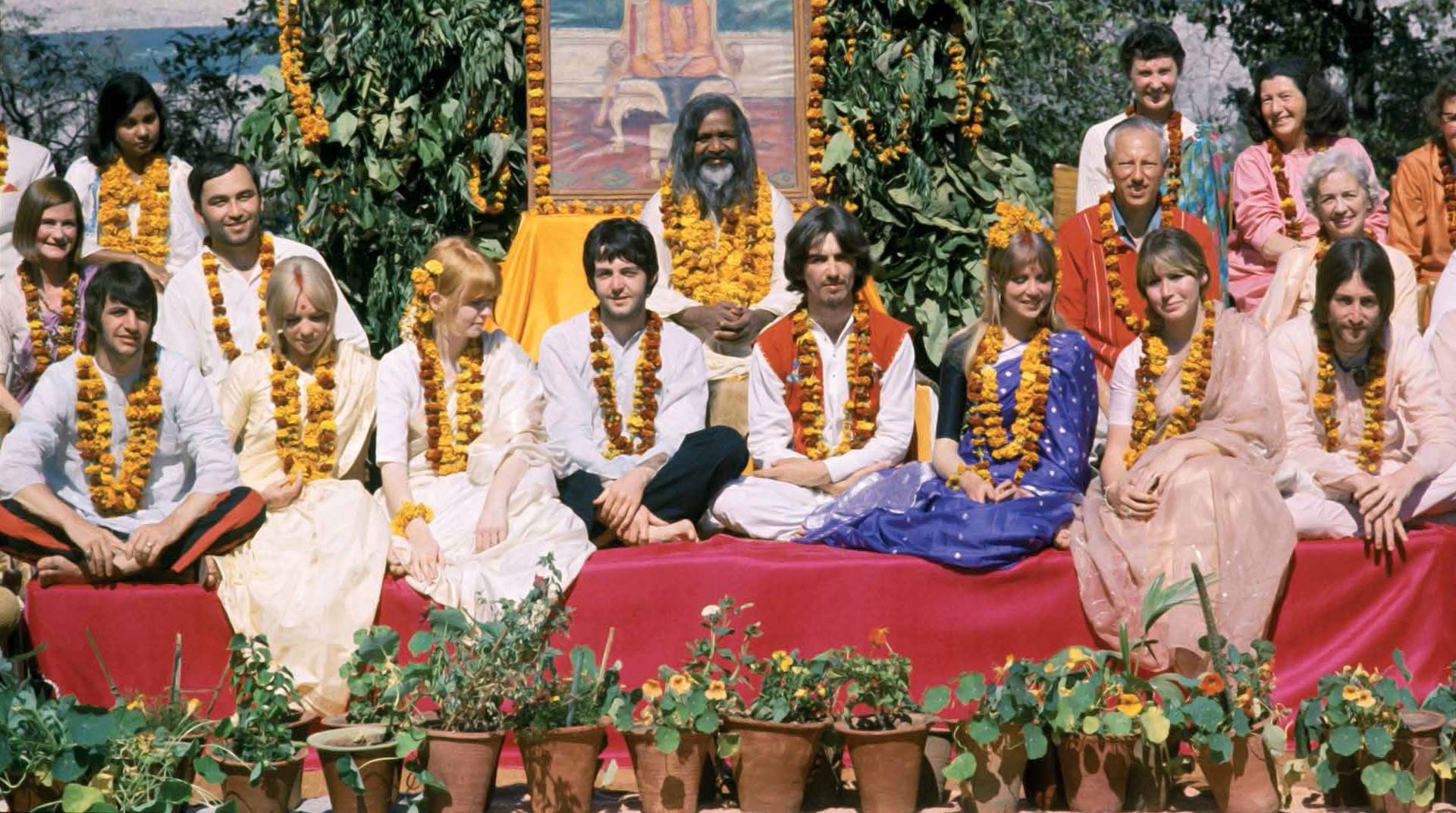
By 1967, George Harrison had come to see LSD as the beginning of a spiritual journey rather than its final destination.
His early trips had profoundly transformed his understanding of consciousness, revealing possibilities he wanted to explore more deeply.
As Harrison later explained:
“[LSD] does open a few doors, but it isn’t the answer. You don’t just take it and that’s it — you’re enlightened. It just showed a lot of people that there’s a God-consciousness. But it can wear off and you can be back at square one, and you don’t know how to get back there without it. That’s why I got into meditation.”9
In August 1967, that spiritual search led the Beatles to a lecture at London’s Hilton Hotel by Maharishi Mahesh Yogi, an Indian guru who had become internationally known for promoting Transcendental Meditation (TM).10
TM was a technique in which practitioners silently repeated a mantra, traditionally for about twenty minutes twice daily, to settle the mind into a quieter state of awareness.
For the Beatles, the appeal was immediate. Here was a method for exploring consciousness that required no chemical intervention.
The next day, they traveled to Bangor, Wales, to study with Maharishi.
During a press conference, the group publicly embraced meditation as an alternative to their psychedelic experimentation.
McCartney explained their evolving philosophy:
“We were looking for something more natural.”11
Six months later, in February 1968, the Beatles traveled to Maharishi’s ashram in Rishikesh, India, for a longer retreat.
There, at the foothills of the Himalayas, they spent their days meditating, studying spiritual philosophy, and writing music.
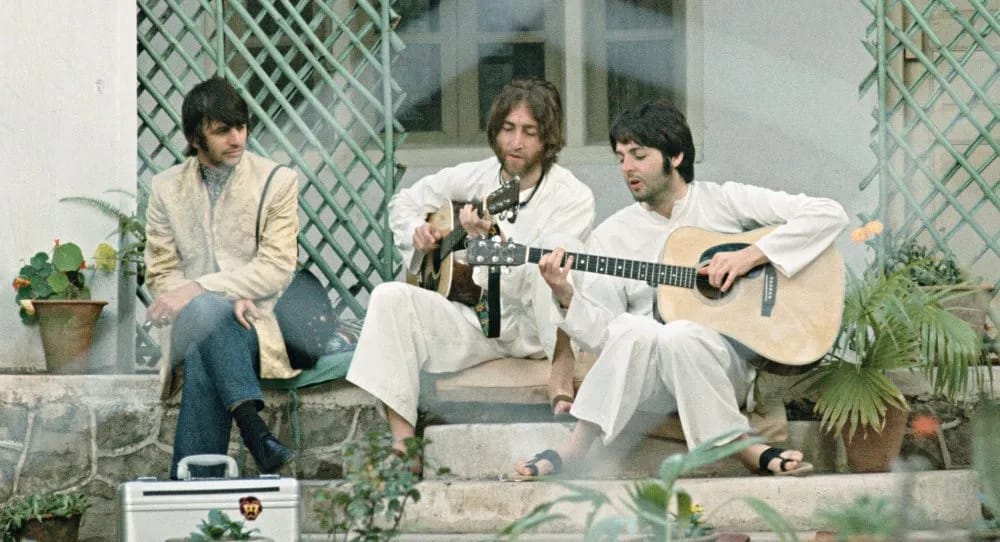
The retreat became one of the most productive songwriting periods of their career, inspiring much of The White Album, including “Dear Prudence,” “Mother Nature’s Son,” and “Sexy Sadie.”
Meditation left a lasting impression, particularly on Harrison, whose spiritual practice continued throughout his life.
The shift from LSD to meditation represented a fascinating development in the Beatles’ psychedelic journey.
LSD had introduced them to extraordinary states of consciousness. Meditation offered a disciplined practice through which to explore similar questions in everyday life.
Yet the Beatles’ turn toward meditation did not mean abandoning their appreciation for psychedelics.
In a 1987 interview, Harrison described his first LSD experience as life-changing:
“It changed me, and there was no way back to what I was before.”12
Reflecting in 1969, Lennon explained:
“Meditation, I still believe in and occasionally I use it… I don’t regret taking drugs, because they helped me.”13
For the Beatles, the psychedelic journey continued long after the acid wore off. It led them deeper into spiritual exploration, and along the way, inspired some pretty great tunes.
Quotes
“Without true wisdom and spiritual insight, we are merely drifting along.”
— George Harrison
“What marijuana and LSD did was to change the sensibility that the Beatles brought to their music.”
— Mark Hertsgaard (Beatles historian)
Trip Thought
A shower thought, but for psychedelics.
The Beatles are arguably the greatest band of all time. And psychedelics played a massive role in their development.
If that doesn’t validate the positive potential of psychedelics, then I don’t know what does.
Community Bulletin
🧘Meditation App: The Way is a guided meditation program led by Zen master Henry Shukman, designed to help build a deeper, more consistent practice. Use this link for 30 days free.
📚 New Book: In Ordinary Mystics, Matt Zemon bridges the clinical lab and the candlelit ceremony, exploring what happens when ordinary people approach psychedelics as a sacrament and encounter the Sacred directly. Check it out here.
🍄 Psychedelic Speakeasy: The Phoenix Rising Psychedelic Speakeasy is coming to Nashville, TN, on Thursday, November 5, 2026! Join fellow psychonauts for an evening of visionary art, music, and fascinating conversations about psychedelic culture. Learn more and grab your tickets here.
Thanks for reading!
If something resonated with you, or if you have thoughts, questions, or ideas for future editions, I’d love to hear from you.
Just reply to this email. I read every response, and your feedback helps shape where this project goes next.
See you next week!
In psychedelic companionship,
- Kyle Sharp
Sources: